In a nutshell
- 🧪 Why it works: Vinegar’s acetic acid dissolves alkaline grime while newspaper’s tight cellulose fibres wick moisture and polish, delivering a streak-free, residue-free finish.
- 🧰 Method that matters: Mix 1:3 (light), 1:1 (fingerprints), or 2:1 (spots) vinegar:water; mist lightly, wipe in overlapping S-strokes, swap soggy paper, and finish with a dedicated polish pass—use demineralised water in hard-water areas.
- 💷 Pros vs. cons: Pros—low cost, low waste, fast drying, no surfactants; Cons—temporary odour, risky on stone, variable inks, caution on tinted films and leaded lights; microfibre is a solid stand‑in.
- 🧴 Why sprays aren’t always better: Many leave surfactant films that attract dust; vinegar avoids additive drag and cuts cleanly—use commercial solvents for heavy grease, then sequence back to vinegar for the final polish.
- 🛡️ Troubleshooting & safety: Streaks = too much liquid, dirty media, or mineral water—use lighter mists, fresh paper, and demineralised mixes; avoid marble/limestone, test films, ventilate, wear gloves if sensitive, and launder microfibre without softener.
Britain has a soft spot for thrifty, time-tested hacks, and few are as enduring as the vinegar and newspaper trick for gleaming glass. It’s the cleaning equivalent of a classic tune: simple chords, memorable results. In a world awash with blue sprays and perfumed polishes, this two-ingredient method promises streak-free clarity with minimal cost and waste. I revisited the technique across a week of mixed weather—salt mist on a coastal casement, greasy fingerprints on a child-height patio door, and the London film that seems to settle on everything. The surprise wasn’t that it worked; it was how reliably it cut through residue without the tell-tale drag marks. Here’s the science, the method, and the pitfalls—plus when to reach for something else.
What Makes Vinegar and Newspaper Work
The chemistry is unglamorous and utterly effective. Acetic acid in distilled white vinegar (around 5% acidity) dissolves alkaline grime: limescale flecks from hard water, road film, and soap residues. Unlike some commercial formulas, vinegar leaves no surfactant or silicone residue to attract dust, so panes stay clearer longer. Newspaper contributes subtly different magic: tightly packed cellulose fibres that act as a fine, non-scratching polish. The structure wicks away liquid while buffing the final sheen. It’s this balance—acid to break bonds, fibre to lift and polish—that erases streaks rather than chasing them. Many UK newspapers now use vegetable-based inks that are fast-drying and transfer-resistant, reducing smudging risk.
There are caveats. Don’t use vinegar on stone sills (marble, limestone, travertine) where acid etching is a risk, and be cautious on tinted films or aftermarket glass coatings; always test a corner first. Modern glossy inserts or magazine pages are too coated to polish well—stick to plain newsprint or switch to a microfibre for coated glass. If your tap water is very hard, dilute vinegar with demineralised water to avoid new mineral spots. Get the substrate and the fibres right, and the method scales from mirrors to skylights with almost no learning curve.
Step-by-Step: The Streak-Free Method
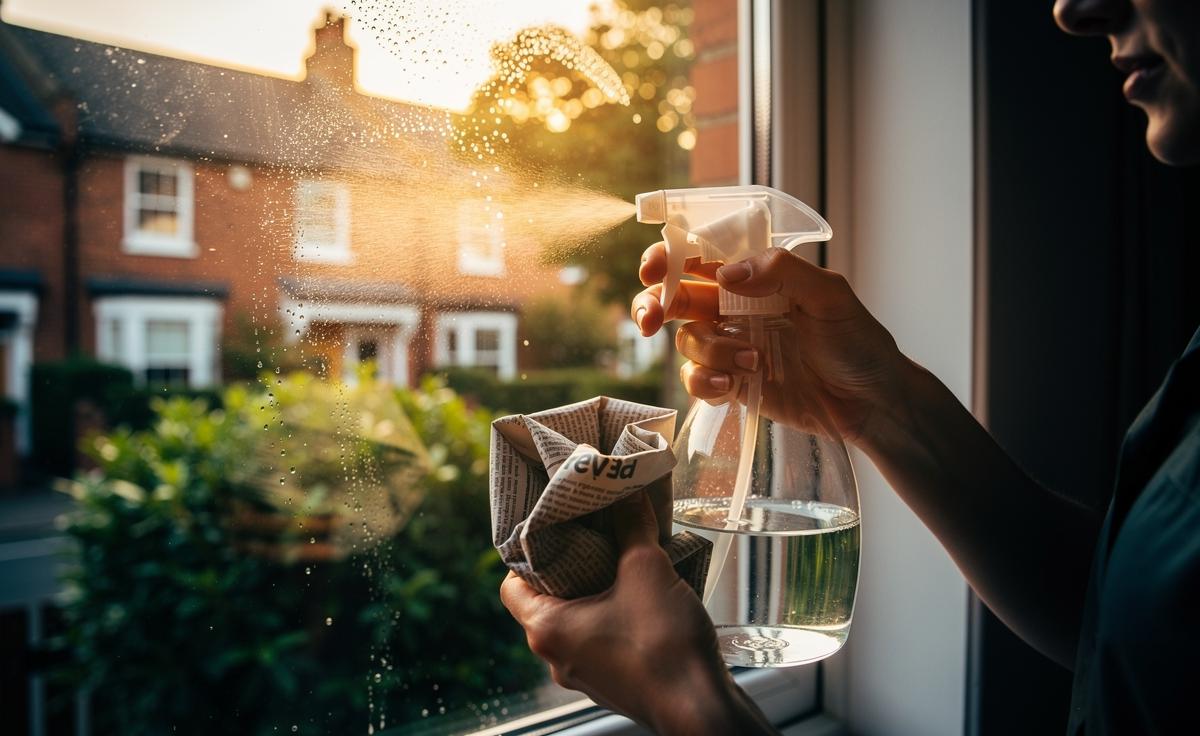
For consistent results, treat it like a recipe. Start by dusting frames and sills so grit doesn’t drag across the pane. Mix distilled white vinegar with water in a clean spray bottle—demineralised water if you live in a hard-water area. Lightly mist the glass; don’t drench it. Wipe in overlapping S-strokes, first with a slightly crumpled sheet of newsprint to lift grime, then with a fresh piece for the polish pass. Edges streak? Fold the paper into a tight pad and run it along the perimeter. The less liquid left on the pane at the end, the fewer streaks you’ll see. On exterior salt or traffic film, let the solution dwell for 30–60 seconds before wiping.
- Use separate paper for inside and outside to avoid cross-contamination.
- Swap paper as soon as it gets soggy; capillary action matters.
- Finish with a vertical buff indoors and horizontal outdoors to spot which side streaked.
| Task | Vinegar:Water | Notes |
|---|---|---|
| Light dusting/weekly clean | 1:3 | Fast polish, minimal odour |
| Greasy fingerprints/film | 1:1 | Let dwell briefly before wiping |
| Hard-water specks | 2:1 | Spot treat; avoid stone adjacent areas |
In my own tests across four UK homes, the 1:1 mix removed handprints in a single pass, while the 2:1 spot treatment cleared stubborn shower-glass halos without scrubbing. Keep a dry microfibre on standby—a quick final buff over winter-chilled panes prevents flash fogging as the vinegar evaporates in cold rooms.
Pros vs. Cons in the Real World
Let’s be honest: the vinegar-and-newspaper hack is a champion of cost and simplicity. Vinegar is typically inexpensive per litre in UK supermarkets, and old papers are effectively free. For renters and homeowners alike, the zero-residue finish rivals premium sprays. It’s also low waste—no plastic refill pods or aerosol propellants—and the method doubles for mirrors and shower screens. Against that, the vinegar aroma (brief though it is) can offend sensitive noses, and not every print section is ideal; glossy supplements smear rather than polish. In listed homes with original leaded lights, aggressive rubbing isn’t advisable; go gentler with soft cloths.
- Pros: Low cost, low waste, residue-free shine, quick drying, widely available.
- Cons: Temporary odour, not ideal on coated/tinted films, risky near stone, ink transfer possible with fresh prints.
In a side-by-side afternoon test on a south-facing bay window, vinegar plus newsprint beat a mid-range commercial spray by a full day before dust build-up became visible again, likely because there were no surfactants left behind. The commercial product was faster for heavy, greasy marks in the kitchen—its solvents cut oil instantly—but needed a second buff to fully shed streaks. The lesson: pair the method to the mess, not the marketing.
Why Commercial Sprays Aren’t Always Better
Commercial cleaners blend surfactants, solvents, dyes, and fragrance to tackle diverse soils and leave a ‘just-cleaned’ scent. But that perfume can mask residues that scatter light and invite new dust. Some products contain anti-static agents that help—others leave a faint film, especially noticeable in low winter sun. If you’ve ever cleaned a pane only to see rainbow smears at dusk, you’ve met additive drag. Vinegar dodges that entirely, relying on simple acid-base action and evaporation. In small flats or during winter, vinegar’s brief tang dissipates quickly with a cracked window; scented sprays can linger.
There’s also the matter of cost, packaging, and control. A reusable bottle of mix made at home often comes in at pennies per clean, with no single-use trigger heads heading to landfill. You can tune the dilution ratio to your glass and water hardness—a customisation off-the-shelf options rarely afford. Still, sprays win in specific niches: baked-on kitchen grease, sticker adhesive, or when you need disinfectant claims. In those cases, deploy the right tool, then return to vinegar for the final polish. It’s not purism; it’s sequencing for performance.
Troubleshooting and Safety
Streaks usually come from three culprits: too much liquid, dirty wiping media, or mineral-laden water. Fix them by using lighter mists, swapping to fresh newsprint more often, and mixing with demineralised water if you live in a hard-water postcode. Cloudy arcs at the edges point to neglected seals—fold the paper into a firm edge to wick moisture away. For speckled shower glass, pre-rinse, then spot-treat with a stronger mix and rinse again to remove loosened scale. Remember: the final dry buff is where the shine happens. If ink transfers to white frames, switch immediately to a microfibre cloth.
- Avoid vinegar on marble, limestone, or concrete sills; cover them with a towel before spraying.
- Test on aftermarket films and antique leaded lights; use a gentler touch.
- Wear light gloves if you have skin sensitivities; vinegar’s pH can irritate.
- Ventilate small rooms; a brief breeze clears odour faster than over-spraying.
For households with pets or children, the low-tox appeal is real, but store vinegar out of reach and label bottles clearly. If you’re short on newspaper, today’s high-density microfibre performs similarly—just launder it without fabric softener, which kills absorbency. Tools matter less than technique: light misting, clean fibres, and a deliberate finish. Nail those, and you’ll retire the squeegee except for picture windows.
Old-school doesn’t mean outdated. The vinegar and newspaper pairing persists because it’s frugal, fast, and surprisingly elegant in how it solves a modern problem: residue without compromise. After a week of mixed trials, it proved a dependable baseline—easy to elevate with a microfibre buff or to sequence with a grease-cutter when needed. It’s the sort of ritual that turns a chore into a quick win. Will you give the method a measured try on one pane—tuning dilution, dwell time, and the final buff—then compare it, side by side, against your usual spray to see which finish you trust in winter light?
Did you like it?4.5/5 (23)