In a nutshell
- 🗑️ England’s Simpler Recycling standard introduces four bins by 31 March 2026, aiming to end the “postcode lottery” and unify collections across the country.
- ♻️ The four streams are: general waste, food waste, paper & cardboard, and other dry recyclables (plastics, metals, glass) — designed to cut contamination and improve recycling quality.
- 📅 Key dates: four-bin service for homes and apartment blocks by 31 March 2026; plastic film and carrier bags added to the plastics stream from 31 March 2027.
- 🏛️ Transitional note: 31 local authorities have bespoke timelines for separate food waste collections due to existing contracts, with Defra working to accelerate rollouts where possible.
- 🚫 What’s not required: no “compostable/biodegradable” plastics (e.g., coffee pods) in food waste; no non-packaging glass; no tissues/AHPs in paper & card. Practical tips: keep paper dry, rinse containers, and avoid “wishcycling” for cleaner, higher-value materials.
England is on the cusp of a major shift in how household rubbish is sorted, as the government’s Simpler Recycling rules bed in from March 2026. Homes will be expected to separate waste into four bins, standardising what is collected from Cornwall to Cumbria and tackling the confusing “postcode lottery” that has dogged recycling for years. The changes affect houses and apartment blocks alike, with councils instructed to overhaul routes, containers and communications. By 31 March 2026, the four-stream service must be in place for most properties, and a year later, new materials join the mix. Here’s what’s changing, why it matters, and how to get ready without cluttering your home or contaminating a collection.
What the Four Bins Will Collect
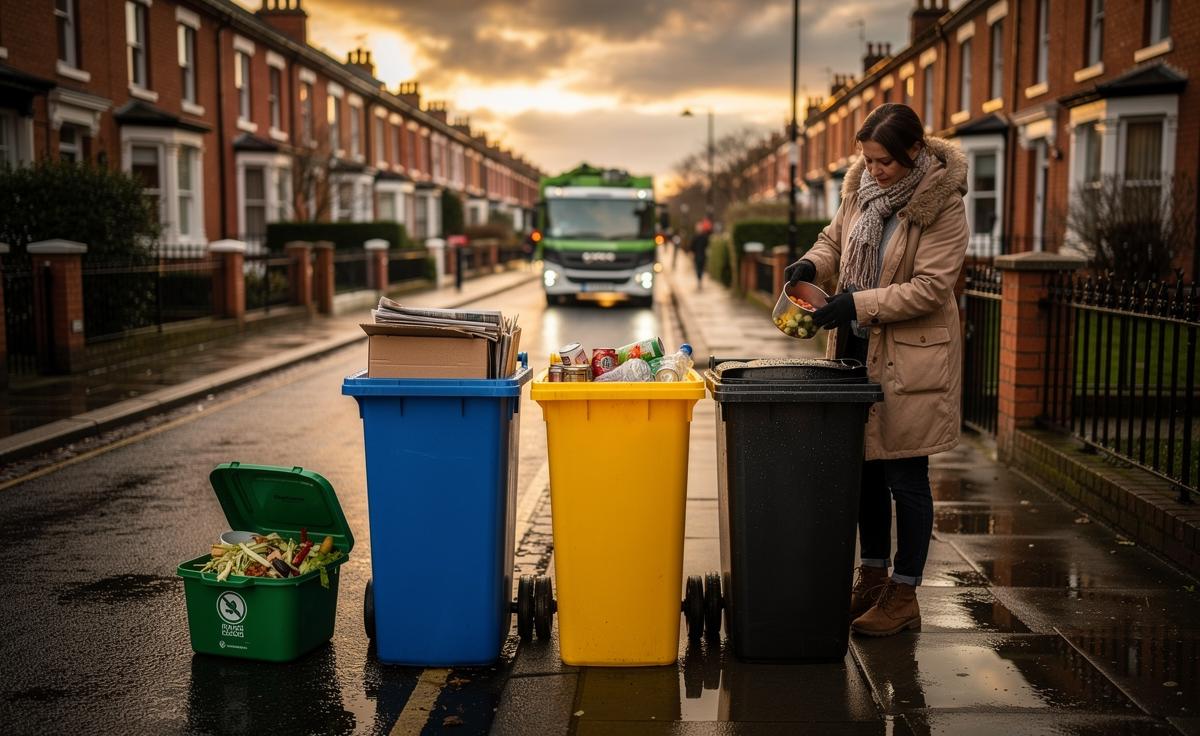
At the core of the reform is a clear, consistent set of streams. Households will separate into four containers: general waste (non-recyclables), food waste (collected weekly in most areas), paper and cardboard, and a single stream for dry mixed recyclables such as plastic packaging, metal, and glass. The aim is simple. Less confusion. Cleaner material. Better recycling markets. Councils are being directed to adopt this minimum, while retaining scope to tailor vehicle types and service frequencies to local streets, flats, and rural routes.
One change will arrive slightly later. From 31 March 2027, plastic film wrapping and carrier bags will be added to the plastics stream, sweeping up crisp packets and bread bags that currently trip people up. Expect new guidance stickers for lids, caddies for scraps, and clear rules on rinsing. The guiding principle is to remove ambiguity at the kerbside and contamination at sorting plants, so that paper stays dry, glass stays intact, and food scraps stay out of residual waste.
Getting the separation right will be rewarded. Cleaner paper attracts higher prices. Food waste fed into anaerobic digesters generates biogas and fertiliser. And glass, when mixed with metals and plastics in the “other dry” container, will still be pulled out by modern sorting systems. What matters most is that households consistently place the right materials in the right box, week in, week out.
| Stream | What Goes In | Key Note |
|---|---|---|
| General Waste | Non-recyclables, hygiene products, soiled items | Keep recyclables out to cut disposal costs |
| Food Waste | Leftovers, peelings, eggshells, bones | Mandatory by 31 March 2026 |
| Paper and Cardboard | Newspapers, cardboard boxes, magazines | Keep dry and flatten boxes |
| Other Dry Recyclables | Plastic packaging, metal cans, glass bottles/jars | Plastic film joins on 31 March 2027 |
Key Dates, Coverage, and Transitional Arrangements
The timetable is tight. By 31 March 2026, all properties in England — including apartment blocks and most business premises — must have the four-core collections. Councils are already reshaping contracts and depot layouts to make room for caddies, extra rounds, and communications campaigns. Then comes a key second step: 31 March 2027, when plastic film wrapping and carrier bags move into the plastics stream, clearing up one of the most contentious grey areas for householders.
There is one nuance. The government has confirmed that 31 local authorities have bespoke transitional arrangements for the separate collection of food waste because of long-running disposal contracts that extend beyond the March 2026 deadline. Defra says it has engaged with each council and will continue to work with them to bring forward food waste collections where possible. The direction of travel is set; the timing for a small number of areas will be staged to avoid breaching existing contracts. For residents, councils will issue targeted updates well before any switch-over.
| Milestone | Date | What It Means |
|---|---|---|
| Four-bin minimum in place | By 31 March 2026 | General, food, paper/card, and other dry collected |
| Plastic film accepted | From 31 March 2027 | Films and carrier bags in plastics stream |
| Food waste exemptions | Transitional | 31 councils have bespoke timing due to contracts |
Items Councils Are Not Required to Collect
The rules are also explicit about what councils do not have to take, which helps cut contamination. For food waste, councils are not obliged to collect any plastic packaging or non-packaging labelled “compostable” or “biodegradable”, including coffee pods. Confusing? Yes, because “compostable” sounds green. But most plant-based plastics don’t break down in standard food-waste systems. Caddy liners specifically designed for food waste are allowed, but treat other compostable plastics as general waste unless your council says otherwise.
For glass, only packaging — bottles and jars — is covered. Not drinking glasses, glass cookware (like Pyrex), vases, light bulbs or tubes, microwave plates, ceramics, mirrors, flat or window glass, or candles. Garden waste won’t include bulky items (garden furniture, fencing), plant pots, sand, tea bags or coffee grounds, animal bedding, oversized branches (unless cut down), sawdust, plastics, tools, stone, gravel or bricks. Paper and card excludes tissue or toilet paper, fibre-based composite cartons (these go in the plastic stream), cotton wool or makeup pads, absorbent hygiene products such as nappies and period products, and wet wipes. When in doubt, check your council’s A–Z — and don’t guess.
- Food waste: no compostable/biodegradable plastics or coffee pods; caddy liners accepted.
- Glass: no non-packaging glass, bulbs, ceramics, mirrors, flat/window glass.
- Garden waste: no bulky items, plant pots, sand, tea bags/coffee grounds, bedding, sawdust, plastics, tools, stone/gravel/bricks.
- Paper and card: no tissues, fibre-composite cartons (put with plastics), cotton wool, AHPs, wet wipes.
Preparing Your Household: Practical Tips and Smart Set‑Up
Space is precious. So plan your set-up before the new containers arrive. Keep the food waste caddy on the counter, with a larger outdoor caddy near the back door. Put paper and cardboard under shelter to stay dry; a soggy box can ruin an entire load. Place the other dry recyclables bin nearest the kitchen, where most plastics, cans and bottles are generated. Think about your home’s “waste journey” — where waste is created, and the shortest route to the right bin.
Labels help. So does routine. Rinse cans and jars to curb smells, give plastic bottles a quick squash, and flatten boxes to save space. If you live in a block, look for floor-by-floor caddies and larger shared containers at ground level; property managers are being briefed to ensure residents have equal access. Expect fresh leaflets and bin-lid stickers explaining the Simpler Recycling rules in plain English, plus service calendars tuned to your street.
Contamination is the hidden cost. A single bag of general waste in the recycling bin can send the whole load to disposal. Avoid “wishcycling”. If an item isn’t clearly listed, leave it out or check your council’s website. Your bin crew would rather collect slightly less, correctly, than cart away a contaminated batch that undoes everyone’s effort. Keep it simple and consistent, and the system will do the heavy lifting.
- Keep streams separate and containers clean.
- Use approved caddy liners for food waste only.
- Store paper/card dry; rinse and squash plastics/cans.
- Check updates on plastic film acceptance ahead of March 2027.
England’s recycling overhaul is ambitious, but the destination is clear: less confusion, cleaner materials, and more value recovered from the 26 million homes that put bins out every week. By 31 March 2026, the four-bin model will be the norm for most properties, with plastic films joining a year later. The success of Simpler Recycling hinges not on technology alone, but on small, repeatable habits formed in kitchens and hallways. Are you ready to map out your home’s bin set-up, and what one change would make sorting easier for your household?
Did you like it?4.6/5 (26)