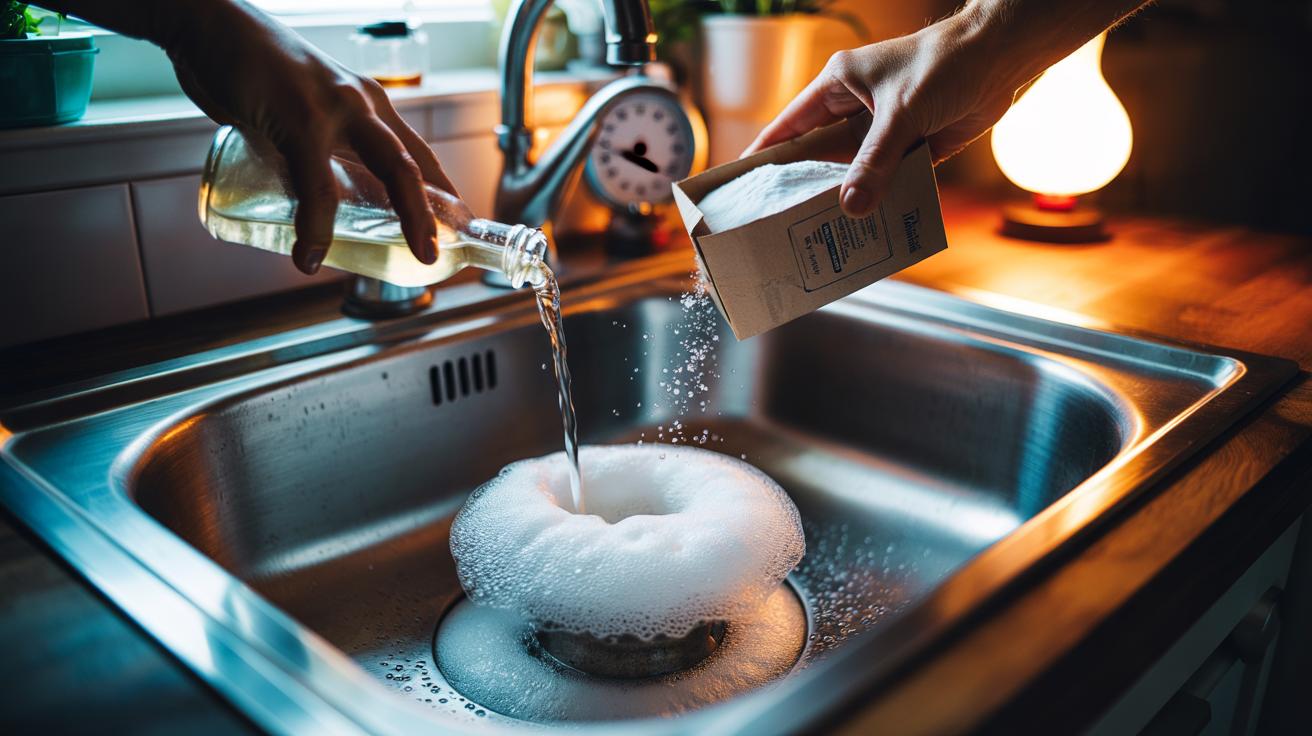
In a nutshell
- 🧪 The chemistry: baking soda (sodium bicarbonate) reacts with vinegar (acetic acid) to release CO₂ bubbles that agitate clogs, loosening grease and soap scum while staying gentle on PVC and metal pipes.
- ⏱️ The 3-minute method: Pre-warm the drain, add 1/2 cup baking soda, wait 1 minute, pour in 1 cup warm vinegar, cover, allow a 3-minute fizz, then flush with a full kettle of hot water.
- ⚠️ Safety first: Never mix with bleach or chemical drain openers; protect finishes from vinegar; avoid boiling water on fragile plastics; if water stays backed up, stop and consider the P-trap or a professional.
- 🧰 Limits: Best for soft clogs (grease, toothpaste, early hair buildup); less effective on mineral scale, lodged objects, or fully compacted hair plugs and structural issues.
- 🔄 Maintenance: Use a monthly mini-dose (50–60 g baking soda + 150 ml warm vinegar), fit drain screens for hair, and deodorise by leaving baking soda overnight before triggering with vinegar.
Clogged drains are domestic drama in miniature: a slow swirl, a rising pool, a stubborn glug. Yet a cupboard staple can restore flow quickly. Pair baking soda with household vinegar and you trigger a fizzing cascade that loosens grime and lifts debris without scorching pipes or breathing harsh fumes. The trick is understanding why the bubbles matter, and how to time the steps so the chemistry works for you, not against you. Done right, the reaction gets to work in as little as 3 minutes, buying you breathing space and, often, a clear sink. Here’s the science, the method, and the limits.
How Chemical Reactions Blast Through Everyday Clogs
The star is sodium bicarbonate (NaHCO₃). It’s a mild alkali that helps break down fatty residues by nudging them toward soap-like compounds, reducing stickiness so gunk releases from the pipe wall. When you add acetic acid (the active in vinegar), the two exchange partners. You get water, sodium acetate, and a rush of carbon dioxide gas. Those CO₂ bubbles don’t just look lively; they agitate the clog, prying apart layers of grease, soap scum, and stray food particles.
Equally important, the reaction creates a temporary foaming plug that expands into nooks inside the trap. That physical expansion helps lift grime where brushes cannot reach. The chemistry itself is gentle compared with caustic drain openers; it won’t etch PVC and is typically kind to most metal pipes. For routine slow drains, this fizzy lift often restores flow in minutes without drama. Heavy, stubborn blockages—think compacted hair ropes or solid obstructions—will resist. But for the everyday sludge that accumulates in kitchens and bathrooms, the fizz–lift combo is fast, targeted, and surprisingly effective.
Timing matters. Sodium bicarbonate on its own starts softening acidic residues. Introduce vinegar too soon and you spend the reaction at the surface. Give the powder a brief head start to settle deeper, then trigger the foam. The goal is to make the bubbles work where the clog lives, not in the sink bowl. That’s why the three-minute window—short, focused, deliberate—pays off.
The 3-Minute Method: Step-by-Step and Timing
Clear the standing water if you can. Warm the pipe with hot tap water for 20–30 seconds; it softens grease and helps the powder travel. Pour in 100–120 g baking soda (roughly 1/2 cup). Wait one minute. Now add 200–250 ml vinegar (about 1 cup), preferably warmed to hand-hot. Immediately cover the drain with a plug or a damp cloth to drive activity downwards. Set a timer for 3 minutes—this is the high-energy window. You’ll hear fizzing; that’s the CO₂ doing the heavy lifting. Finish with a full kettle of hot water to flush loosened debris.
| Step | Quantity | Time | What Happens |
|---|---|---|---|
| Pre-warm drain | Hot tap water | 20–30 sec | Softens grease; improves flow path |
| Add baking soda | 100–120 g (1/2 cup) | +1 min wait | Settles into trap; starts neutralising acids |
| Add vinegar, cover | 200–250 ml (1 cup) | 3 min | CO₂ foam agitates and lifts deposits |
| Flush | 1 kettle (~1.5–2 L) | Immediately | Washes loosened debris downstream |
Never combine this method with bleach or commercial drain cleaners; mixing chemicals can release hazardous gases. Protect surfaces like natural stone from vinegar splashes. If water doesn’t budge after the flush, repeat once or use a plunger to add mechanical shear, then flush again. In food-heavy kitchen drains, finish by running hot, soapy water for 30 seconds to carry away leftovers. The entire intervention takes under ten minutes, with the crucial fizz phase lasting just three.
Limits, Safety, and Long-Term Maintenance
This method shines on soft clogs: kitchen grease, toothpaste gels, shaving residue, and the early stages of hair-and-soap buildup. It’s less effective when the blockage is structural—mineral scale, a lodged object, tree-root intrusion, or a fully impacted hair plug. If your sink backs up instantly and stays that way, stop and avoid repeated chemical attempts; you may need to remove the P-trap or call a professional. The mixture is generally safe for PVC, copper, and stainless steel plumbing. Avoid prolonged vinegar exposure on rubber gaskets and decorative finishes.
Make it routine and you’ll notice fewer dramas. A monthly maintenance dose—50–60 g baking soda followed by 150 ml warm vinegar, then a hot flush—keeps biofilms and light grease from consolidating. In hair-prone bathrooms, add a simple drain screen; it prevents the snarls that baking soda cannot fully dissolve. For persistent odours, leave the baking soda overnight, then trigger with vinegar in the morning; deodorising improves when the powder lingers against the film.
Two final guardrails. Do not use this method immediately after pouring a caustic drain opener; neutralisation can splutter dangerously. And mind temperature extremes: boiling water is fine for metal and most modern PVC, but avoid it on old, brittle plastic or where manufacturer guidance says otherwise. Think of the fizz as a first-line, low-risk intervention. If it restores flow, great. If not, it still prepares the ground for safer mechanical clearing with a plunger or drain snake.
In a world of harsh gels and costly call-outs, the humble pairing of baking soda and vinegar remains a nimble fix—fast to act, gentle on pipes, and friendly to homes with children or pets. Treat it as both triage and upkeep: a three-minute fizz to break the logjam today, and a monthly ritual to prevent tomorrow’s slowdown. If your drains could talk after that cleansing rush, what stubborn culprits would they confess to harbouring—and what timing tweaks will you try next to keep them running clear?
Did you like it?4.5/5 (30)