In a nutshell
- 🔬 The mix works through synergy: salt provides gentle abrasion and raises ionic strength to destabilise residues, while hot water lowers viscosity, boosts flow, and carries debris away.
- 🧼 Effective on grease, soap scum, and biofilm; brine dehydrates slime layers and heat softens fats, especially when used early before deposits harden.
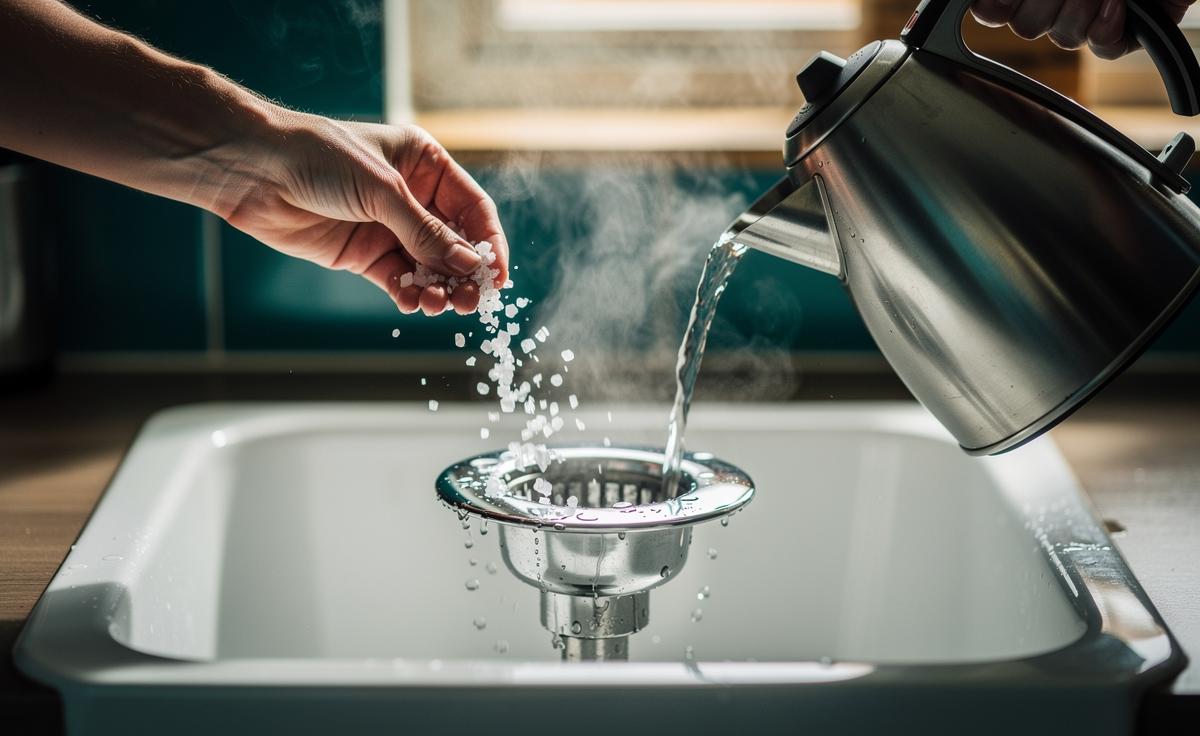
- 🛠️ Method: add 4–6 tbsp salt, wait a minute, then pour 1–1.5 L near‑boiling water slowly; wait 5 minutes, flush hot, and repeat if flow improves—do not mix with chemical drain cleaners.
- ⚠️ Safety: metal pipes handle boiling, but for PVC let the kettle cool 60–90 seconds (aim ~60–80°C) and avoid thermal shock—warm porcelain with hot tap water first.
- 🚫 Limits: won’t fix root intrusion, collapsed pipes, or dense hair wads; use mechanical tools or call a professional. Best as a first response and routine maintenance.
There is a quiet satisfaction in solving a household problem with what you already have in the cupboard. The humble pairing of salt and hot water is one of those back-pocket fixes many Brits swear by, not out of folklore alone but because the science is sound. Poured strategically, the mix can loosen greasy films, disturb microbial slime, and nudge small clumps of debris down the line. It is not magic. It is physics and chemistry, working together. Used correctly, this low-cost method can restore flow without harsh chemicals or a frantic call-out. Here is why it works, when it does not, and how to deploy it safely.
How the Salt and Hot Water Combination Works
On its own, table salt (sodium chloride) is not a solvent for fat or soap scum. Its power in drains comes from two traits: gentle abrasion and brine chemistry. Dry or semi-dissolved grains provide a light scrubbing action as they move, scouring the inner pipe surface and breaking the cohesion of clinging films. Then there is the brine. A concentrated salt solution increases the liquid’s ionic strength, which interferes with the electrostatic forces that make gels, food starches, and protein residues sticky. The brine can cause these materials to flocculate and detach, ready to be swept away by flow.
The hot water is the enabler. Heat reduces viscosity dramatically, so the liquid accelerates and carries dislodged particles downstream. It also softens waxy deposits and encourages turbulent flow in bends and traps. The two together are synergistic: salt destabilises and scours; heat mobilises. The result is a brief window in which a stubborn film turns into movable debris. Used promptly after cooking, or at the first sign of sluggish drainage, the effect is amplified because deposits have not fully hardened.
Why Salt Disrupts Grease, Soap, and Biofilm
Kitchen slowdowns are often a cocktail of grease, food particles, and soap scum. Heat does most of the heavy lifting by softening fats and lowering their adhesion to pipe walls. Salt’s role is subtler but important. First, its crystals act as micro-abrasives, especially effective against thin, sticky films that cling in elbows and traps. Second, a concentrated brine exerts osmotic pressure on microbial biofilm—the slippery matrix that bacteria build on damp surfaces—dehydrating and destabilising it so it sloughs off more readily. This is why a salty flush can leave pipes feeling markedly “cleaner.”
With soap residues, ionic strength matters. A salt-rich solution can disrupt the charged layers that help soap scum adhere to mineral-coated pipes, loosening the film so hot water can peel it away. Do not expect miracles: the effect is modest and situational. Think of salt as a force multiplier for heat, not a standalone solvent. For heavy, cold congealed fat plugs, you may need repeat cycles or a plunger to start flow, after which the salt–heat combo can finish the job.
Heat, Expansion, and Flow: What Boiling Water Adds
Temperature transforms the physics inside a drain. As water heats, its viscosity drops and flow becomes more energetic, especially through narrow restrictions where small gains in diameter mean big increases in throughput. That energy, combined with the slight thermal expansion of metal fittings, can crack the grip of brittle deposits. Hot water also dissolves or softens common culprits: semi-solid cooking fats, dried sauces, toothpaste residues, and gelatinised starches. Even calcium stearate (a component of soap scum) becomes easier to budge when surrounded by fast-moving, hot liquid.
Salt contributes a few extras. In solution it minimally raises the boiling point—measured in tenths of a degree at household concentrations—but the headline benefit is the creation of a dense brine front that pushes through the trap with more momentum. Add gravity and you get a strong flush. Poured slowly and steadily, a kettle’s flow can act like a brief pressure wash for the first metre of pipe. Always consider material limits, though: steaming-hot water is safe for most metal pipes, but plastic needs care.
Safe Use, Limits, and When to Call a Plumber
Start simple. Tip 4–6 tablespoons of salt into the drain. Let it sit a minute to contact wet surfaces. Then pour 1–1.5 litres of near-boiling water in a steady stream. For PVC fixtures, let the kettle stand 60–90 seconds after boiling to cool slightly. Wait five minutes, flush with hot tap water, and repeat once if flow improves. Do not mix with chemical drain cleaners; reactions and splashes can be hazardous. If the sink is fully backed up, plunge first to open a path; the method needs movement to work.
Use judgment. Tree roots, collapsed pipes, dental floss tangles, or large foreign objects will shrug off salt and heat. So will thick, long-cured grease caps far down the line. In those cases, mechanical methods or a professional are safer and faster. Here is a quick reference to guide your choice:
| Blockage Type | Why Salt + Hot Water Helps | Caveat |
|---|---|---|
| Fresh grease film | Heat softens; salt scours and destabilises | Act while still warm |
| Soap scum/biofilm | Osmotic shock to biofilm; flow lifts residue | May need two cycles |
| Hair wad | Heat improves flow around fibres | Often needs a snake |
| Root intrusion | None | Call a professional |
For materials, assume metal tolerates boiling, but keep plastics cooler: 60–80°C is sensible. Avoid shock-pouring onto dry porcelain; warm the basin first with hot tap water.
It is hard to beat the elegance of a fix that costs pennies, avoids caustics, and leverages the physics of flow. Used regularly after messy cooking, the salt and hot water method can keep household drains clearer and odours at bay, while giving you a first response when the sink starts to sulk. It is not a cure‑all, but it is a smart first move before tools and invoices enter the chat. What is your current kitchen or bathroom bottleneck, and where do you suspect this simple duo would make the most immediate difference?
Did you like it?4.6/5 (26)