In a nutshell
- 🚗 Shaving cream creates a microscopic, hydrophilic anti-fog film that lowers surface tension, spreading moisture into a clear sheet and stopping fogging instantly.
- 🧴 Application: clean glass, apply a pea-sized dab on a cloth, spread thinly, let haze, then buff clear; avoid ADAS cameras/sensors and reapply every 2–4 weeks on interior glass only.
- 📊 Pros vs alternatives: fast, cheap, widely available; shorter durability (1–4 weeks) than some anti-fog sprays, while dish soap/shampoo can work but attract grime if overused.
- ⚗️ Science snapshot: reducing the contact angle and hysteresis prevents droplet formation; humectants like glycerin stabilise a uniform film for clear, consistent visibility.
- 🧽 Best results: pair the coating with smart demisting—AC on, fresh-air intake, warm air to the screen—and buff thoroughly to avoid night-time glare.
Picture the scene: you slide into the driver’s seat on a damp UK morning and the windscreen clouds over in seconds. Visibility gone. Patience tested. Instead of waiting for the heater to catch up, a simple hack clears the view: shaving cream. This isn’t motoring folklore. It’s a quick, repeatable method that lays down a microscopic anti-fog film on the inside of your glass. The result feels almost magical because the effect is immediate. By stopping tiny droplets from forming in the first place, the window stays clear even when warm breath meets cold glass. Here’s why the trick works, how to apply it properly, and when it’s the smart choice.
How Shaving Cream Stops Fogging
Fogged windows aren’t dirt; they’re physics. Warm, moist cabin air meets a colder pane, water vapour condenses into millions of microdroplets, and those droplets scatter light in all directions. Your eyes read that as haze. Shaving cream contains surfactants and fatty acids (think stearic acid soaps) that reduce surface tension, making water spread as a thin, transparent sheet rather than beading as droplets. No droplets, no scatter, no fog. Crucially, that hydrophilic film is already on the glass before you exhale or the kids clamber in, so the “unfog” effect feels instant.
There’s more at work. Humectants such as glycerin help hold a trace of moisture uniformly, stabilising a clear film. Lightweight solvents evaporate, leaving a near-invisible residue that encourages wetting. This is the same principle behind ski goggle anti-fog coatings: convert a droplet problem into a film solution. You’re not changing the cabin humidity; you’re changing how water behaves on the glass. Done right, visibility improves dramatically and stays steady through the stop-start grind of an autumn commute.
Step-by-Step Application Inside Your Car
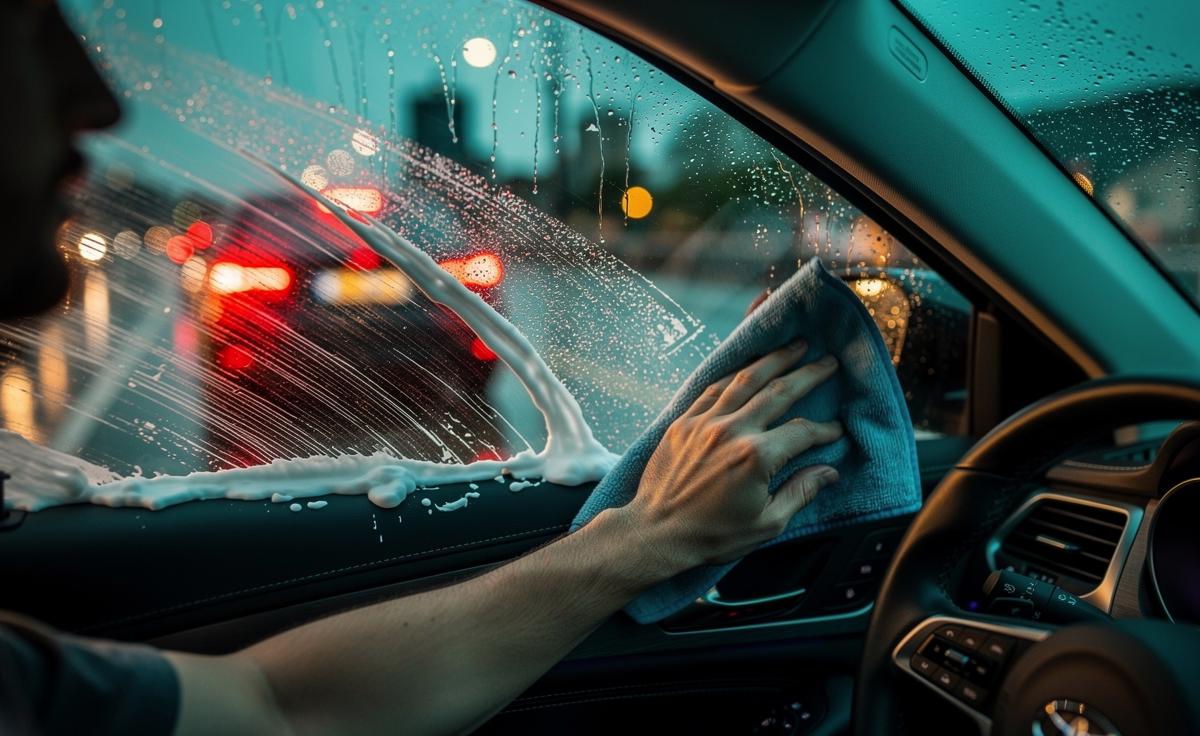
Start with clean glass. Use a dedicated glass cleaner and a dry microfibre to remove fingerprints, vinyl off-gassing, and old smears; residue fights the coating. Shake the shaving cream, dispense a pea-sized dab onto a clean cloth—not onto the glass—and work it thinly across the interior windscreen and side windows in overlapping passes. Aim for a whisper-thin layer. Let it haze for 30–60 seconds, then buff firmly with a fresh microfibre until perfectly clear. If you can see swirls in daylight, keep buffing—streaks can cause night-time glare.
A few cautions. Avoid areas in front of ADAS cameras, rain sensors, and the black dotted frit zone near the mirror; leave those clean. If you have aftermarket tints or heated elements on the rear screen, test a small corner first. Most modern foams are glass-safe, but fragrances and conditioners vary. Reapply every two to four weeks, or sooner if you notice the effect fading. Keep a small cloth in the glovebox for a quick rebuff on damp days. And yes, this is for interior glass only; exterior exposure to road grime will defeat the film quickly.
Longevity, Pros and Cons Compared With Alternatives
Is shaving cream the best tool every time? It depends on budget, patience, and how extreme your conditions are. Its strengths are cost, speed, and availability—there’s probably a can in the bathroom already. The trade-off is durability: the film will gradually pick up dust and handprints and may need regular buffing. Commercial anti-fog sprays often last longer but can be pricier and just as streak-prone if you rush the prep. Old-school stand-ins like dish soap or baby shampoo work similarly by lowering surface tension, though they can attract grime faster if overapplied.
| Method | How It Works | Durability | Risks/Cons |
|---|---|---|---|
| Shaving cream | Surfactant film prevents droplets | 1–4 weeks | Streaks if thick; reapply often |
| Anti-fog spray | Purpose-made hydrophilic coating | 2–8 weeks | Cost; can haze if misused |
| Dish soap/shampoo | Low surface tension wetting | Days–2 weeks | Sticky if overdone; dust magnet |
| HVAC/demister only | Reduces moisture at glass | On demand | Slow on cold starts; fuel use |
For the morning rush, a fast, forgiving method often wins. Pair the coating with best practice—AC on, fresh-air intake, warm air to the screen—and you’ll stack the odds in your favour on sodden winter school runs.
The Science in a Nutshell: From Droplets to Transparent Films
Why does this chemistry feel instantaneous? Two reasons. First, the contact angle shifts. On bare glass, microscopic contaminants create sites where water nucleates into droplets with higher contact angles, perfect for scattering visible light (wavelengths around 0.4–0.7 µm). The shaving-cream residue lowers that angle and its hysteresis, so condensed water spreads. Second, the film evens out microtopography, suppressing the random droplet sizes that create sparkle and haze. By pre-conditioning the surface, you change the outcome before condensation begins.
Think of the layer as a friendly referee that tells water to “lie flat.” The fatty-acid soaps and surfactants align at the air–water–glass interface, trimming energy where droplets would otherwise form. Humectants like glycerin help stabilise the sheet, limiting break-up into beads during rapid temperature swings. That’s why you can step into a chilly cabin, breathe out, and still see traffic clearly. It’s not sorcery; it’s surface science working quietly at micron scale, turning a fog-prone pane into a cooperative, transparent film.
Used with a light hand, shaving cream is a clever, low-cost anti-fog that earns its place in a UK driver’s winter toolkit. It acts fast, plays nicely with glass, and buys you precious seconds when the school run collides with drizzly weather. Keep your application thin, your buffing thorough, and your demister habits sound, and you’ll enjoy crisp sightlines in conditions that usually blur them. Ready to try the bathroom-cabinet fix on your next damp morning—or will you stick with sprays and the blower and compare the difference on your own windscreen?
Did you like it?4.6/5 (28)