In a nutshell
- 🧫 Cold ≠ sterile: resilient pathogens like Listeria and E. coli survive at fridge temps, forming hard-to-remove biofilms.
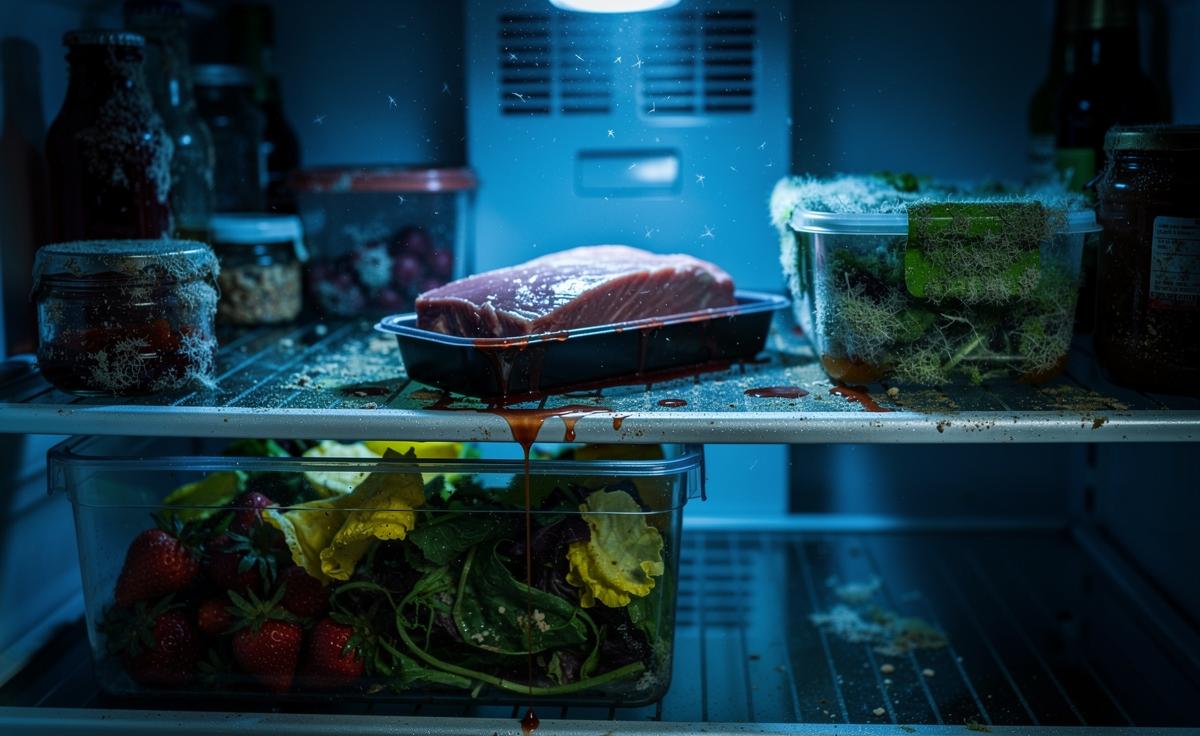
- 🥩 Cross-contamination spreads fast: raw juice drips and sticky surfaces transfer microbes to ready-to-eat foods, raising illness risk.
- 🍓 Spoilage accelerates: mouldy produce and clutter trigger spore dispersal and food waste, obscuring dates and safe items.
- 👃 Odours signal danger: decomposing residues and mould spores create allergens; always clean, sanitise, and dry seals, drawers, and racks.
- ⚡ Performance suffers: blocked airflow and dirty seals cause uneven temps—keep fridges at ≤5°C—driving up energy bills and reducing safety.
You shut the door and forget. The fridge hums, stoic and cold, and the assumption is simple: cold equals clean. It doesn’t. Neglecting a regular monthly clean creates a quiet, cumulative hazard in the very place you store food for your family. Microscopic life, sticky spills, and unnoticed drips accumulate faster than you’d believe. Leftovers age into science experiments. Raw juices migrate. Shelves become petri dishes disguised as glass. The result? Hidden pathogens, foul odours, wasted money, and a surprising hit to performance. Here’s what actually happens when you delay that scrub, and why a monthly clean is less a chore than a protective ritual for your health.
The Invisible Microbiome: What Breeds Between Shelves
Cold does not equal sterile. Many bacteria and moulds survive and slowly multiply at standard refrigeration temperatures, making the fridge a prime site for a creeping, invisible bloom. The culprits are familiar yet underestimated: Listeria monocytogenes, which tolerates the chill; Salmonella and E. coli on contaminated packaging; and mould spores that drift in with produce. A single spill—meat juices on a lower shelf, soup droplets on a handle—can seed a surface biofilm. Once that biofilm forms, microbes anchor themselves in microscopic scratches, becoming harder to dislodge with a casual wipe.
Salad drawers are a notorious hot spot. Vegetables shed moisture and soil particles, building a damp, nutrient-rich layer that nourishes yeasts and moulds. Unwashed herb bunches and muddy roots introduce spores and bacteria, which then migrate to ready-to-eat items. Ready-to-eat foods demand special caution because you won’t cook them to reduce contamination. Even a clean-looking shelf can harbour resilient microbes between cleans, especially where condensation collects or crumbs hide under rails.
Skipping a monthly clean lets these communities mature. Odours intensify, and the risk of transferring pathogens from shelf to packaging—and then to plates—rises. It’s not dramatic. It’s incremental. That’s what makes it dangerous.
Cross-Contamination, Spoilage, and Real Food Waste
Fridges are busy. Hands in, hands out. Raw meat trays shift, a yogurt tub tips, a berry punnet leaks. This motion spreads contaminants across handles, seals, and shelves. Cross-contamination happens in tiny acts: a drip under a milk bottle, a knife stored briefly on a shelf, a lid touched after handling raw chicken. Ethylene gas from ripe fruit accelerates neighbouring produce ripening, and when cleaning lapses, spoiled items linger. Mould spores launched from one fuzzy strawberry colonise the next punnet. One neglected corner becomes the source of a chain reaction.
Food waste follows. The “I’ll use it tomorrow” leftovers slide to the back and vanish into shadow. Labels smudge. The use-by date passes. In the confusion, you bin good items because they smelled suspicious after sitting near something genuinely rotten. Over time, a messy, uncleaned fridge blurs the line between safe and uncertain, driving both risk-taking and wasteful caution.
| Risk | What It Causes | How Quickly | Warning Sign |
|---|---|---|---|
| Raw juice drips | Pathogen spread to ready-to-eat foods | Immediately to days | Sticky patches, reddish stains |
| Mouldy produce | Airborne spore dispersal | Days to a week | Musty smell, fuzz on fruit |
| Condensation pools | Biofilm growth | Days to weeks | Slippery film, cloudy water |
| Cluttered shelves | Hiding expired food | Weeks | Unknown leftovers, stained containers |
Odours, Allergens, and Chemical By-products You Can’t Ignore
The scent that hits you when the door opens isn’t just unpleasant; it’s diagnostic. Spoiling proteins release amines; fishy trimethylamine, pungent putrescine, and cadaverine signal advanced decay. Fermenting dairy produces sour volatiles, while vegetables gone anaerobic under cling film emit sulphurous notes. Persistent smells are a warning, not a normal part of fridge life. They mean residues are decomposing on surfaces, gaskets, and in the crevices of removable trays.
Moulds add a second layer of trouble. Their spores become airborne each time you disturb a drawer, which can aggravate asthma or trigger allergies. Some species produce irritating metabolites on damp cellulose packaging or cardboard egg boxes. A monthly clean breaks that cycle—wiping seals, scrubbing drawer runners, and drying surfaces denies moulds the damp they need. Don’t forget the door rack: it’s warmest and often sticky with spills, a magnet for yeasts that sour juices and condiments. Sanitise after cleaning, not before, so you remove the grime that shields microbes. And always dry: lingering moisture invites the next bloom the moment the door clicks shut.
Performance, Bills, and Safety: The Cost of a Dirty Fridge
Hygiene isn’t the only casualty. A dirty interior undermines performance. Sticky vents and crowded shelves impede airflow, creating warm pockets where milk curdles faster and salads wilt. The thermostat may read fine, but temperature can vary significantly from one shelf to another when circulation is blocked. The compressor cycles more frequently to compensate, nudging up your energy bills and shortening component life. Grimy door seals don’t close as tightly, bleeding cold air. Even a thin film of residue on sensors or the back panel can mislead temperature regulation.
Food safety lives and dies by temperature control. In the UK, keeping your fridge at or below 5°C is the accepted rule of thumb for safety. An unclean, overpacked, and poorly arranged fridge struggles to maintain that standard across all zones. That’s when borderline foods slip into danger—cooked meats on the door, soft cheeses adjacent to a warm light housing, leftovers tucked behind a warm motor hump. Monthly cleaning, paired with a quick audit of contents, restores order: air can move, seals grip, and you actually see and rotate what you need to eat first.
A monthly clean is not a cosmetic flourish; it’s a health safeguard, an energy saver, and a practical act that protects your grocery budget. Clear the shelves, bin the dubious, scrub, sanitise, and dry. Label leftovers with dates, park raw meats low and contained, and keep salad drawers crisp, not swampy. Small habits, big dividends. The alternative is a slow slide into odour, waste, and avoidable risk—quiet, cumulative, costly. What will you find when you open your fridge today, and what simple change could you make this month to keep it safer, fresher, and truly cold?
Did you like it?4.7/5 (21)