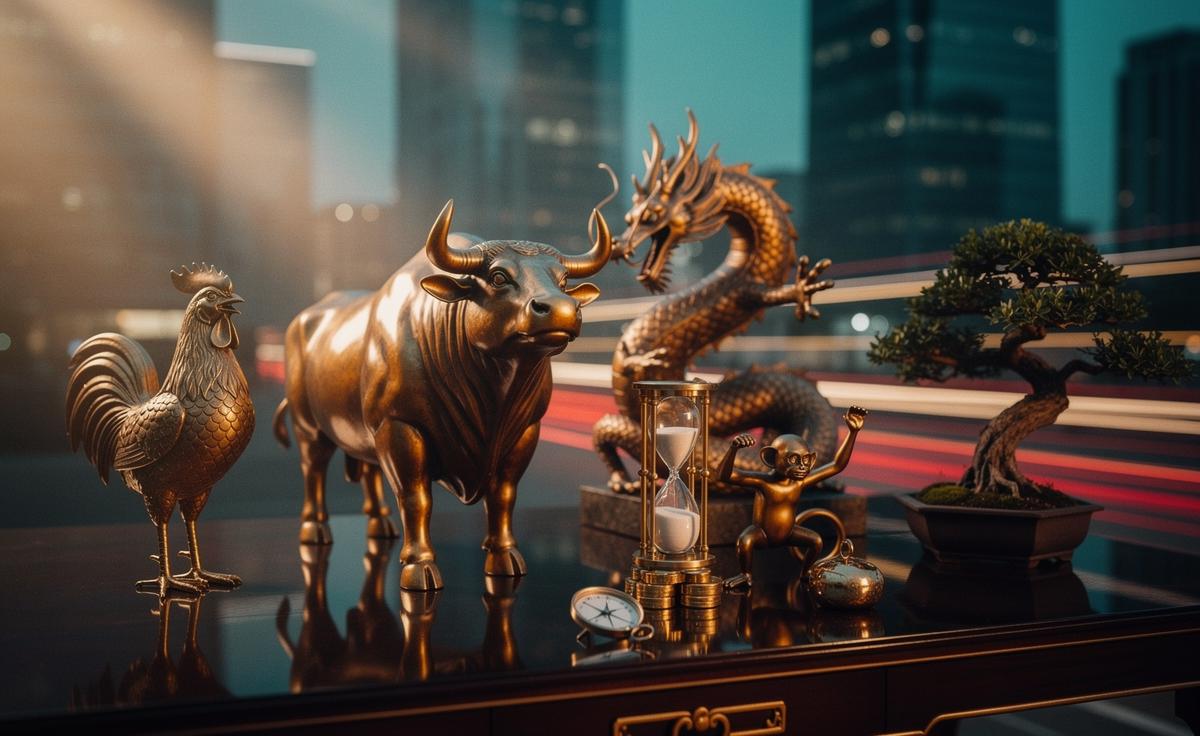
In a nutshell
- 📅 Context: On 9 January 2026—at the tail of the Wood Snake and before Fire Horse—conditions favour structure, systems, and strategic patience, positioning the Ox, Rooster, Monkey, and Dragon for long-term success.
- 🐂 Ox: Wins through strategic patience and quiet compounding; lock fixed-rate costs, phase roll-outs, and automate checks—Midlands logistics case shows steady savings turning into throughput gains; trade-off is reliability vs. moving too slowly.
- 🐓 Rooster: Converts precision into pricing power—monetise compliance, publish SLAs, and leverage certifications; Manchester SaaS win shows governance readiness boosts valuation while avoiding perfectionism that delays shipping.
- 🐒 Monkey: Masters optionality with JV pilots, revenue shares, and convertibles; Bristol fintech deal stacked stepwise minimums to cap downside; focus on sequencing and kill-switches to prevent scattered priorities.
- 🐉 Dragon: Scales vision via sequenced resources—tranche-based funding, capacity bookings, and staged launches; Leeds green-energy pilots proved capital discipline reduces dilution and anchors credibility.
Seen from a UK newsroom that prizes evidence and narrative in equal measure, January 9, 2026 arrives with the lunar calendar still in the Wood Snake year, just weeks before the Fire Horse cycle begins. That crossover sets a distinctive tone: Wood feeding Fire, Fire generating Earth, and Earth birthing Metal. In practical terms, it favours signs aligned with structure, systems, and strategic patience. Today, four Chinese zodiac signs stand out for long-term success—not as fortune-cookie fixes, but as frameworks for decisions on investment, careers, and ventures. Read these signals as lenses, not limits, and use them to refine plans, risk controls, and compounding plays through Q1 2026.
| Sign | Edge on 9 Jan 2026 | Best Move | Watch-out |
|---|---|---|---|
| Ox | Earth stability in an Ox month backdrop | Lock fixed-rate costs; schedule phased roll-outs | Overcommitting capital before validation |
| Rooster | Metal clarity from process and audit strength | Monetise precision—compliance, QA, brand polish | Perfectionism delaying delivery |
| Monkey | Deal agility as Wood-to-Fire spurs momentum | Structure options, partnerships, and earn-outs | Chasing noise; scattered priorities |
| Dragon | Earth vision anchored by incoming resources | Stage funding tranches; secure infrastructure | Grand scope without cash-flow discipline |
Ox: Strategic Patience Pays Dividends
The Ox thrives on systems that compound quietly. With January sitting in an Ox-flavoured solar period, Earth steadiness is amplified: this is the day to favour durable choices over flashy moves. Think infrastructure upgrades, long-dated contracts, and cost-of-capital decisions that lock in predictability before the Fire Horse year stirs activity. In the Wood Snake’s final stretch, Fire generates Earth, which nourishes the Ox’s pragmatic instincts—ideal for pension contributions, inventory optimisation, or refinancing fixed assets at sensible rates.
Case in point: a Midlands logistics lead consolidated two leasing agreements into a single, longer-term facility with a modest break clause. The headline saving wasn’t dramatic, but the reduction in operational volatility freed cash for a staff training programme that lifted throughput by 7% over the quarter. That’s compounding in action—small, dependable gains stacking into durable advantage.
- Pros vs. Cons: Reliability, cash-flow clarity, and brand trust vs. the risk of moving too slowly while opportunities heat up.
- Best Use Today: Commit to phased roll-outs, strengthen supplier SLAs, and automate routine checks.
- Why Speed Isn’t Always Better: An Ox’s pace secures quality; rushing can inflate rework costs and erode margins.
Anchor your calendar with review cadences—weekly KPIs, monthly audits, quarterly scenario tests—so small wins don’t get lost in noise. Long-term success for the Ox rests on ritualised execution and well-timed restraint.
Rooster: Reputation, Systems, and the Power of Precision
The Rooster turns precision into profit. Metal thrives when Earth is well prepared, and late Snake-year Fire has been feeding that Earth. Today favours audit trails, compliance monetisation, and brand tidying that translates into pricing power. If it’s measured, it can be improved—and sold at a premium. In UK terms, this could mean leveraging ISO certifications to unlock enterprise contracts, or converting meticulous QA into a service line—think “compliance-as-a-service” for SMEs chasing regulated clients.
One Manchester SaaS founder (Rooster) shifted from feature sprints to reliability sprints, published uptime guarantees, and won a health-tech integration on the strength of documented resilience. The lesson is simple: reputational capital, once codified, becomes financial capital. In investor notes, we see repeat references to governance readiness as a valuation lift—exactly the Rooster’s sweet spot.
- Pros vs. Cons: Credibility, repeatability, and margin expansion vs. analysis paralysis that delays shipping.
- Best Use Today: Refresh risk registers, publish SLAs, and add case studies with quantified outcomes.
- Why “Perfect” Isn’t Better: Ship the 90% that solves the client’s problem; keep a tight change log for the next 10%.
Let precision be your marketing: showcase audits passed, defects reduced, and response times verified. The market will pay for what you can prove, not merely what you can promise.
Monkey: Agile Deals Turn Volatility Into Options
The Monkey is primed for choice architecture. As Wood tips toward Fire, energy accelerates; the Monkey’s gift is converting that movement into optionality. Don’t bet the farm—structure the farm: joint ventures with step-in clauses, revenue-share pilots, and convertible instruments that cap downside while preserving upside. In media and tech, that means licensing trials; in retail, limited geo-roll-outs with data-sharing agreements; in consulting, milestone-based retainers.
A Bristol fintech (Monkey CFO) negotiated a distribution deal where minimums stair-step quarterly, with a right to renegotiate spreads based on customer acquisition cost. The result: testing new channels without the burn of a full launch. That’s classic Monkey—smart asymmetry, low regret.
- Pros vs. Cons: Speed, creativity, and leverage vs. the risk of scattered effort and narrative drift.
- Best Use Today: Draft option-laden term sheets, pilot with clear kill-switches, and document learnings in a shared playbook.
- Why “Bigger” Isn’t Better: Monkeys win by sequencing—not by swallowing the whole market at once.
Curate two pipelines: fast experiments for discovery and slower, larger bets for scaling. The gap between them is where misallocation creeps in; guard it with ruthless prioritisation.
Dragon: Vision Scales When Resources Are Sequenced
The Dragon pairs imagination with Earth-backed execution. With Fire generating Earth, today rewards Dragons who stage their ambition—locking infrastructure, talent, and capital in the order growth actually needs. Vision is not the plan; sequencing is the plan. That translates into tranche-based funding, pre-booked manufacturing capacity, or phased regional launches that mirror cash-flow reality.
Consider a Leeds green-energy start-up led by a Dragon founder. Instead of pursuing a national rollout, they secured grid-ready pilots in two councils, ring-fenced OPEX, and mapped hardware deliveries to grant disbursements. Investors warmed to the capital discipline, not just the narrative. It’s the Dragon’s advantage: big-picture storytelling paired with an operational spine.
- Pros vs. Cons: Charisma, momentum, and partner pull vs. scope creep and burn-rate blindness.
- Best Use Today: Lock procurement windows, align milestones to cash drawdowns, and formalise co-marketing timelines.
- Why “Faster” Isn’t Always Better: A staged runway reduces dilution and maximises credibility at each lift.
Write the sequencing on one page: resources, milestones, and decision gates. Show it to partners and lenders; alignment now prevents renegotiation pain later.
On a day shaped by the tail of the Wood Snake and the stirrings of Fire Horse, the Ox, Rooster, Monkey, and Dragon each find a distinct edge: patient compounding, precision-led pricing, option-rich dealmaking, and sequenced scale. Use these lenses to refine your calendar, capital stack, and team rituals, and highlight the one constraint that most improves your odds. Astrology won’t do the work for you—discipline will. Which of these strategies will you adopt first, and how will you measure whether it’s delivering by the end of Q1 2026?
Did you like it?4.3/5 (22)