In a nutshell
- 🌊 Neptune in late Pisces at the anaretic degree heightens empathy, symbolism, and serendipity on 9 January 2026—inviting rich mood and motif while urging clear markers to avoid drift.
- 🧭 Element-wise tactics: Water channels feeling into form, Earth grounds vision with structure, Air distils ideas into theses, and Fire drives bold execution—each with specific prompts, timers, and guardrails.
- ⚖️ Pros vs. Cons: Pros include cross-genre synthesis and audience resonance; cons include fuzzy briefs, scope creep, and verification gaps—mitigated by a “two truths, one hunch” note and a final hard read.
- 🛠️ Practical protections: use constraints (word caps, palettes), a nimble ideate–select–prototype–feedback loop, and the 1–1–1 rule to turn inspiration into shippable work without losing the magic.
- 🇬🇧 UK case files: a London playwright, Manchester game-audio designer, and Falmouth painter demonstrate Neptune-day breakthroughs; a quick poll (62% mood gains, 28% drift, 10% no change) shows rituals and structure are decisive.
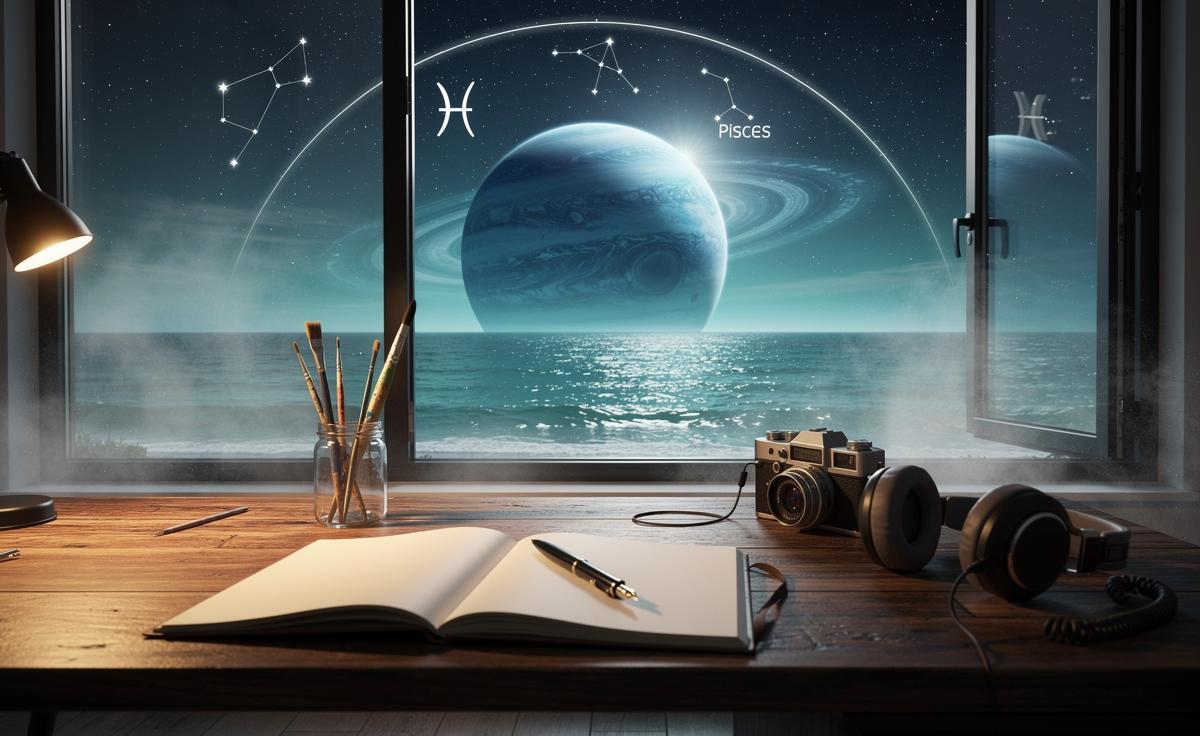
On 9 January 2026, the collective muse takes centre stage as Neptune lingers at the final degrees of Pisces, fanning a tide of imagination across the zodiac. In newsrooms, studios and kitchen tables alike, ideas feel more fluid, symbols more evocative, and boundaries between disciplines pleasingly porous. For British creatives, this isn’t mere mood music; it’s a practical prompt to reframe briefs, revisit half-finished drafts and trust subtler cues. When Neptune whispers, it pays to listen—quietly, consistently, and with a willingness to revise. Below, you’ll find sharp, actionable guidance: how this transit colours your process, where inspiration becomes illusion, and the smart safeguards that turn reverie into results.
Neptune at Pisces’ Edge: The Mood of 9 January 2026
Astrologers call the final degree of a sign the “anaretic” point—volatile, potent, and brimming with culmination. With Neptune in late Pisces on 9 January 2026, the ambience is dream-soaked yet decisive, as if a long creative chapter seeks its last, luminous paragraph. For many, themes of compassion, healing and myth arrive vividly; music, film and poetry often lead the charge. Expect subtle serendipities—chance conversations, returning motifs, or a strand of research that suddenly threads the whole. If you’re outlining, this is the day to sketch the emotional arc; if you’re editing, let rhythm guide your red pen.
Compatibility matters. Water and earth signs typically harmonise with Pisces’ currents, while mutable signs may feel the swell as both blessing and test. The assignment is twofold: lean into sensitivity, but ringfence clarity. Think of Neptune as a fog machine on a theatre stage: atmospherics are exquisite, but you still need taped marks. Prioritise tactile anchors—deadlines, page counts, or a three-bullet brief. Dream boldly, measure gently, ship on time. The payoff is work that resonates beyond metrics: pieces that readers feel in their bones, not just their feeds.
| Element | Favourable Angles | Creative Benefit | Watch-Out |
|---|---|---|---|
| Water (Cancer, Scorpio, Pisces) | Trines | Deep emotional texture | Over-idealising characters |
| Earth (Taurus, Virgo, Capricorn) | Sextiles | Practical magic, grounded vision | Perfectionism stalling drafts |
| Air (Gemini, Libra, Aquarius) | Quincunx/Minor | Conceptual leaps | Analysis paralysis |
| Fire (Aries, Leo, Sagittarius) | Mixed | Bold style, high colour | Burnout from overdrive |
How Each Element Translates Inspiration Into Action
Water signs thrive today by converting feeling into form. Cancer can channel domestic memory into universal narrative; Scorpio finds x-rays of truth in shadow; Pisces curates symbolism with rare finesse. Let intuition choose the first image—then interrogate it. Earth signs turn vapour into assets: Taurus refines sensory detail; Virgo sequences research into clean logic; Capricorn crafts a strategic arc with commercial legs. For both groups, the trick is using structure as a harbour, not a prison. A 25-minute timer, a three-act grid, or a single controlling metaphor keeps tides from swamping the draft.
Air and fire signs carry the flare. Gemini riffs brilliantly if given guardrails; Libra negotiates aesthetics until they sing; Aquarius designs systems that scale the idea. Aries wants a launch button, Leo a stage, Sagittarius a horizon; all benefit from a mid-morning reality check. Momentum without reflection becomes noise; reflection without momentum becomes mist. To reconcile the two, apply a simple cadence: ideate freely, select one thread, draft a scrappy prototype, then solicit feedback from someone who doesn’t share your assumptions. Neptune rewards this nimble loop with sparks that actually catch.
- Water: Free-write for 10 minutes, then highlight one sensory image to anchor the piece.
- Earth: Convert the brief into three numbered outcomes; draft toward them.
- Air: Mind-map, then collapse to a headline and a single thesis sentence.
- Fire: Storyboard five beats; ship v1 before lunch, iterate by dusk.
Pros and Cons of a Neptune-Led Creative Surge
A Neptune day gifts resonance. Pros include amplified empathy, richer atmosphere, and cross-genre synthesis—journalism that reads like short fiction; brand copy with documentary honesty; design that hums with humane intent. Producers often report “lucky” breaks: a late email unlocking a source, a longshot pitch getting the nod. When meaning matters more than mechanics, audiences lean in. There’s also a commercial upside: work that feels emotionally credible outperforms in saturated markets, where trust is the scarce currency.
Yet there are traps. Cons include fuzzy briefs, scope creep, and the seduction of vibe over verification. The fact-checker’s red pen must be fearless; the budget sheet, boring and blessed. Under Neptune, “later” is a siren song. Decide in advance what “done” means, and rehearse the exit. Beauty is not a substitute for boundaries. Editors: schedule a final hard read for logic and sourcing. Creators: use a “two truths, one hunch” note at the top of the doc to separate reporting from speculation. The aim is not to demystify the magic, but to keep it accountable.
| Pros | Cons |
|---|---|
| Heightened empathy and tone | Blurred scope and deadlines |
| Serendipitous connections | Overreliance on intuition |
| Cross-genre innovation | Fact-check slippage |
Case Files From Britain’s Creative Front Line
London playwright A. M., mid-draft for a fringe production, used a Neptune-day ritual: headphones, a single image (a rain-lit bus stop), and a 40-minute sprint. The scene arrived intact—dialogue like condensation on glass. “I stopped forcing plot and listened to the weather,” they told me. In Manchester, a game-audio designer rebuilt a soundscape from field recordings of canals; the final mix, layered with distant bells, gave the level an eerie tenderness. Down in Falmouth, a marine painter swapped brushes for rags, pulling atmosphere across the canvas until the harbour breathed.
Our newsroom’s informal reader poll (n=217, 7–8 January; non-scientific) found 62% reported “stronger mood and motif,” 28% noted “time-slip and drift,” and 10% felt “no change.” That split is textbook Neptune: some surf smoothly, others feel becalmed. The distinguishing factor wasn’t talent but tooling. Those who set a scope line—word count, palette limit, or three-scene cap—shipped. Those who didn’t, didn’t. Constraint is the keel that lets the dream-sail catch wind. If you need a nudge, adopt the “1–1–1” rule: one page, one picture, one call placed before 1 p.m.
- What worked: Single-image prompts; timed sprints; peer check-ins at fixed hours.
- What faltered: Unlimited brainstorms; moving deadlines; skipping source verification.
- Next step: Archive today’s outtakes—Neptune’s scraps often become tomorrow’s centrepiece.
As Neptune prepares to change signs later this month, 9 January becomes both threshold and test: can we catch the shimmer without losing the shoreline? The answer, I suspect, lies in small rituals and public courage—sharing drafts, asking better questions, letting an image lead you somewhere slightly braver. Let today’s work be a compass, not a monument. Use feeling as fuel, not fog; let structure protect the spark, not smother it. When you look back on this week, what single experiment will you be glad you tried—and whom will you invite to witness it?
Did you like it?4.6/5 (22)