In a nutshell
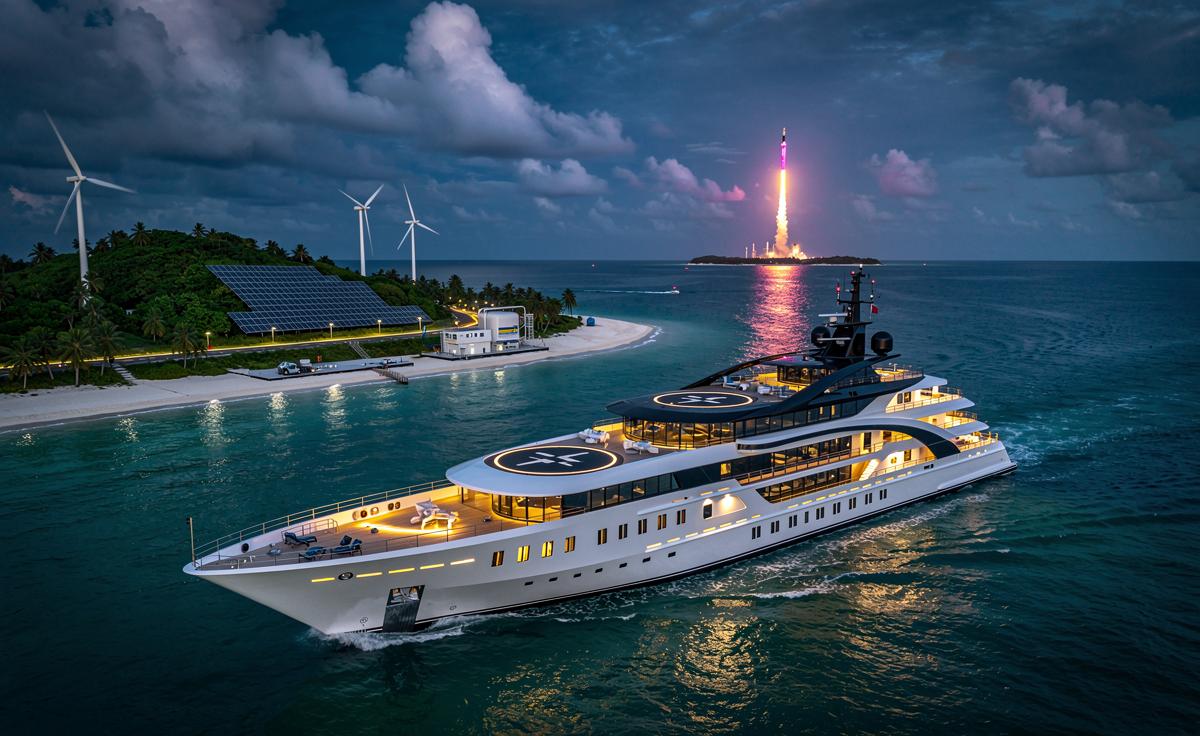
- 🚢 Hyperyachts redefine excess: 150m+ vessels with hydrogen-assisted propulsion, twin helipads, hospital-grade med bays, and stealth features, costing £500m–£1.2bn plus staggering annual operations for crews 100+ strong.
- 🏝️ Private islands become infrastructure projects: beyond £80–£150m purchase, owners invest £150–£300m in microgrids, desalination, fibre, staff villages, and reef restoration—pursuing “sovereignty-lite” without political baggage.
- 🛰️ Orbital missions move the status game skyward: seats priced at £40m–£70m, suborbital hops at £350k–£400k, and a pathway to private space stations blending hospitality with research and bespoke payloads.
- 🧭 Status shifts from ownership to orchestration: commissioning moving, floating, and orbiting ecosystems that fuse leisure, science, and soft power while maximising privacy and narrative control.
- ⚖️ Luxury as infrastructure raises dilemmas: climate-conscious design and local benefits sit alongside widening access gaps—prompting questions about who sets the rules and who gets invited aboard.
The modern uber-wealthy are no longer satisfied with gilded penthouses and discrete supercars. Their new obsession? Building entire ecosystems that move, float, or orbit. Prices once whispered at private clubs now spill into public view, and the totals are staggering even by high-net-worth standards. In interviews with yacht agents, island brokers, and spaceflight facilitators, a clear pattern emerges: status is migrating from ownership to orchestration—from buying an asset to commissioning a world. The cheque sizes have jumped from eight figures to well into the ten- and eleven-figure range, and the engineering involved rivals state projects. It’s not just extravagance; it’s ambition, logistics, and a kind of private futurism.
The Hyperyacht Arms Race
The old superyacht is over. Welcome to the hyperyacht: 150 metres and beyond, naval architecture that pushes ice-class hulls into tropical anchorages, and sustainability tech that reads like a climate lab. Brokers describe clients requesting hydrogen-assisted propulsion, battery packs the size of townhouses, and tenders that double as rescue craft. Helipads? Now it’s two, at different elevations. Spa decks become medical suites with telemedicine links. These vessels now cost more than a flagship London skyscraper, and waiting lists at top Northern European shipyards stretch for years. The price? Frequently £500 million to £1.2 billion, before annual operating costs that could fund a regional hospital.
What justifies it? Privacy, certainly, yet the appeal goes deeper. Owners want a platform for science dives, art residencies at sea, and itineraries that thread polar seasons with Monaco in high summer. Crew numbers swell to triple digits, forming a floating village—chefs, medics, drone pilots, conservation specialists. The design brief often mandates a low observable profile against commercial radar and anti-drone domes to keep paparazzi distant. A hyperyacht is no longer a boat; it’s a sovereign-like project wrapped in steel and secrecy. And the aesthetic has shifted from ostentation to purposeful minimalism—soft power in brushed aluminium.
Private Islands, Purchased With Public Infrastructure
For buyers with a restless compass, the ultimate flex is not a deed but a footprint. A private island, yes, but also the runway, the desalination plant, the microgrid, and the reef-restoration budget. A Caribbean cay might list at £80–£150 million; the real bill arrives later. Experts cost the build-out—power, water, fibre, staff housing—at £150–£300 million, with timelines governed by permits, storms, and fragile ecologies. The island becomes an infrastructure project thinly disguised as a retreat. Buyers are purchasing remoteness and then spending fortunes to make it less remote. The contradiction is half the allure.
Climate risk forces new design language. Elevated villas hug windward shade; mangrove buffers are preserved; piers float to spare seagrass. Some buyers purchase blue carbon offsets tied to local mangroves, and fund clinics or schools to ease labour sourcing and build goodwill. Shorelines get lidar-mapped. Quiet luxury rules: more reef nursery tanks, fewer fireworks. “Sovereignty-lite” is the whisper term—maximum autonomy without political baggage. A London broker I spoke with described clients who time their arrivals to turtle hatchings rather than fashion weeks. The money isn’t just large; it’s patient, and it leaves as many foundations as foundations leave pylons.
| Asset | Headline Price | What Sets It Apart |
|---|---|---|
| Hyperyacht (150m+) | £500m–£1.2bn | Hydrogen assist, hospital-grade med bay, twin helipads |
| Private Coral Atoll | £110m purchase + £250m infrastructure | Microgrid, desalination, reef restoration bond, staff village |
| Orbital Mission (10 days) | £40m–£70m per seat | Astronaut training, station access, bespoke research payload |
Space Tourism’s Next Leap: Orbital Estates
Surface-level spectacle is passé; billionaires are now eyeing the sky. Suborbital joyrides still happen—think £350,000–£400,000 for minutes of microgravity—but the status move is longer, harder, and startlingly expensive. Private companies broker orbital missions with training regimes that stretch months, biomedical screening, and bespoke research. Prices per seat typically land between £40 million and £70 million, with optional extras for brandable experiments and live-streamed classroom sessions. What once read like science fiction has become a line item in the family office budget. The hardware is real, and the bragging rights—first in the circle—are priceless.
The horizon is bolder still: modular private space stations that can bolt on hospitality suites, observatories, or manufacturing bays for fibre-optic strands and bioprinted tissues. Insurers, once wary, now talk deductibles and debris clauses. Designers sketch cabins that mimic circadian light, use velcro artistry, and tuck cameras into every porthole. The narrative shifts from “tourist” to “sponsor-patron”: fund critical science, experience orbital sunrises, bring home a story money can’t buy. The price tag may be astronomical, but the pitch is simple—own the vantage point, shape the future. For some, that’s irresistible; for others, it’s a gravity-defying folly.
What ties these purchases together is a hunger for control: over distance, over time, over narrative. Hyperyachts erase borders; private islands rewrite supply chains; orbital missions transcend them. The figures shock—hundreds of millions here, billions there—but the psychology is consistent. It’s patronage disguised as play, research masked as leisure. If the public sphere feels gridlocked, the ultra-rich build their own spheres—floating, fixed, or freefall. That leaves a lingering question for the rest of us: when luxury becomes infrastructure, who sets the rules, and who gets invited aboard?
Did you like it?4.4/5 (30)