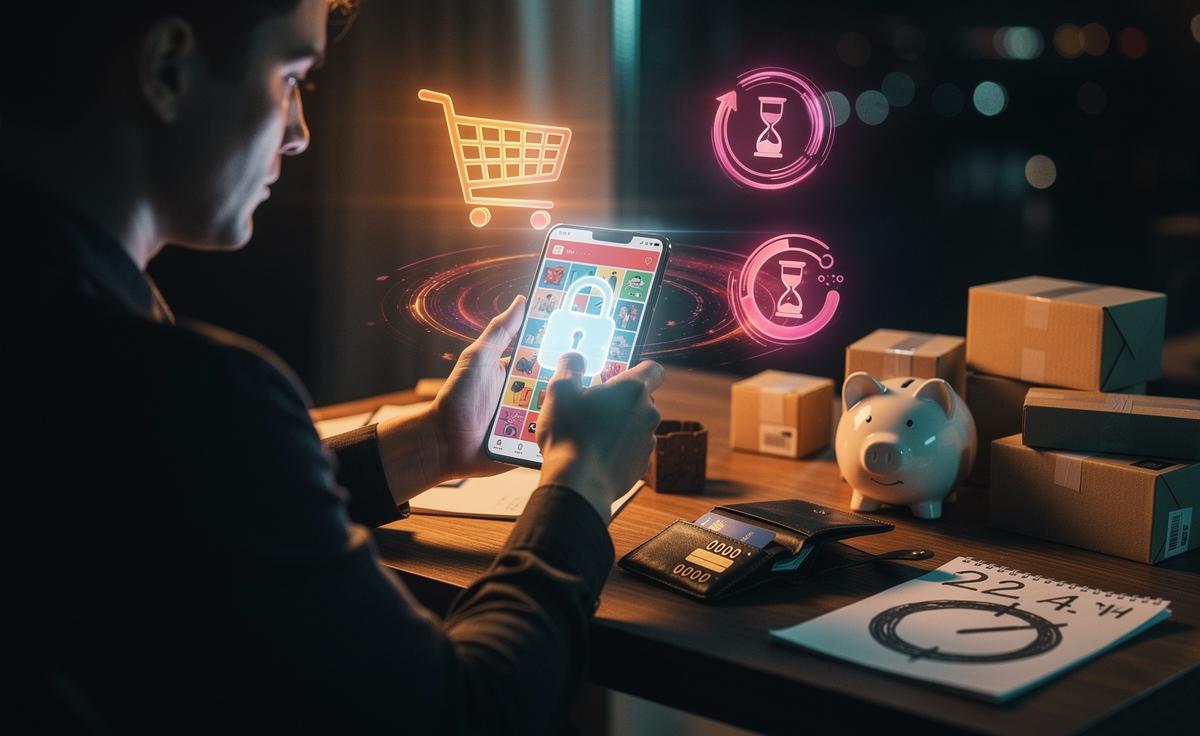
In a nutshell
- 🧠 Impulse buying exploits present bias, a reduced pain of paying with digital wallets, and cues like scarcity, social proof, and variable rewards; when tired or rushed, decision fatigue makes quick taps feel irresistible.
- 🛒 Retail design removes friction via one‑click checkout, BNPL, personalised nudges, and free‑shipping thresholds; re‑introduce helpful friction by disabling one‑click, removing saved cards, and ignoring countdown timers.
- 🧰 Simple controls work: set a 24‑hour cooling‑off rule, ring‑fence a monthly “fun money” pot, mute push notifications, and pay with debit/cash for discretionary buys to restore mindful spending.
- ⚖️ UK protections help—use the 14‑day cooling‑off period under Consumer Contracts Regulations to try at home and return what doesn’t earn its place, turning regret into a reversible decision.
- ✅ Not all impulse is bad: define your “good impulse” (small joy, replaces worse habit), but apply the gut‑check trio—“Do I own an equivalent?”, “Will I use it within 72 hours?”, “Would future‑me thank me?”—to keep goals on track.
We like to imagine we’re rational shoppers, yet few of us are immune to a late‑night “just adding this to basket” moment. Retailers design digital aisles that feel effortless: one‑click checkout, next‑day delivery, buy now pay later. Meanwhile our brains reward novelty and convenience, nudging us towards purchases that feel small, fast, and harmless. The combination of instant gratification and invisible friction makes impulse buying disarmingly tempting. In this piece, I unpack how psychology and product design converge to push our buttons—and offer simple, practical strategies to regain control without giving up the joy of a well‑timed treat.
The Psychology That Makes Us Click “Buy Now”
Behind every unplanned purchase sits a cocktail of cognitive biases. Present bias overvalues immediate pleasure, while the future cost fades into mist. The “pain of paying” drops when we use cards or digital wallets, because we don’t physically feel money leaving. Variable rewards—the thrill of finding a bargain—act like a slot machine; sometimes the deal is meh, sometimes it’s magical, and that unpredictability keeps us hunting. Then there’s scarcity (“Only 3 left!”) and social proof (“Amelia in Leeds just bought this”), subtle cues that transform curiosity into action. When novelty and urgency collide, self‑control is outgunned.
I once shadowed a reader who swore she never impulse‑buys. On her commute, a push notification offered a limited‑time skincare discount. She tapped, Apple‑Paid, and closed the tab within 15 seconds—no conscious “decision” ever surfaced. The tell? She was tired and in a hurry: two contexts that prime impulsivity. Decision fatigue narrows our focus to short‑term relief; loss aversion reframes “missing out” as a loss. Over time, these micro‑wins train a habit loop: trigger, tap, reward. Impulse buying isn’t a moral failure; it’s a predictable response to cues designed to be irresistible.
How Retail Design Reduces Friction (And Your Resistance)
Retailers don’t just remove friction—they strategically reassign it. One‑click checkout and saved cards compress a multi‑step process into a tap. Buy Now, Pay Later (BNPL) splits costs so the reward is now and the discomfort is later, shrinking perceived risk. Personalised homepages and retargeting ads surface exactly what you’re likely to crave, while free‑shipping thresholds nudge you to add extras “to save money.” Design turns hesitation into momentum by making the default choice the fastest one. Even “just browsing” becomes primed conversion: wish lists, cart reminders, and friendly “low‑stock” banners quietly transform a maybe into a yes. The line between consideration and commitment blurs, particularly on mobile where speed is king.
As a user‑experience editor told me, “We treat checkout time like runway length: the shorter it is, the more take‑offs we get.” This is why your details auto‑fill, your size is pre‑selected, and your preferred courier is remembered. None of this is sinister; convenience is valuable. But the aggregate effect is a “slippery slope” for your budget. Awareness is the first antidote. The second is re‑introducing tiny, intentional friction where it helps you, not the retailer.
| Tactic | What It Does | Psychological Lever | How To Disarm It |
|---|---|---|---|
| One‑click checkout | Removes steps | Effort minimisation | Disable one‑click; require password at pay |
| BNPL options | Splits payment | Present bias | Hide BNPL, pay in full or delay 24 hours |
| Scarcity timers | Creates urgency | Loss aversion | Take a timed pause; re‑check in morning |
| Free‑shipping threshold | Encourages add‑ons | Perceived saving | Pay shipping or wait to bundle essentials |
Simple, Evidence‑Backed Strategies to Regain Control
Start by changing the environment, not your willpower. Remove saved cards, log out of retail apps, and add a passcode to your digital wallet. These micro‑frictions give your reflective brain a few vital seconds. Use a 24‑hour cooling‑off rule for non‑essentials; park items in a wish list and revisit with fresh eyes. Automation beats resolve: set a “fun money” pot via a separate account or prepaid card and spend it guilt‑free—then stop. Disable push notifications from shopping apps, and unsubscribe from “last chance” emails. For in‑store temptations, carry a list and pay by debit or cash for discretionary buys to restore the “pain of paying.”
Lean on rights that already protect you. In the UK, the Consumer Contracts Regulations generally provide a 14‑day cooling‑off period for most online purchases, giving you time to change your mind. Make it a habit to try‑on at home and return what doesn’t earn its place. If late‑night scrolling is your weak point, schedule “no‑shop hours” or move retail apps to a hidden folder. Small, consistent guardrails outperform heroic self‑denial. Finally, set personal rules that are easy to remember: “No purchases over £50 without sleeping on it,” or “Three uses planned before I buy.” These heuristics cut through the noise when your energy dips.
- Impulse firewall: remove saved cards; disable one‑click; turn off notifications.
- Budget buffer: ring‑fence a monthly “treat” amount in a separate pot.
- Decision check: ask “Would I buy this at full price?” and “What will it replace?”
When Impulse Is Helpful (And Why Restraint Still Wins)
Not all spontaneity is wasteful. Buying flowers at a market to brighten a grey week, tipping a creator, grabbing train‑station fruit instead of crisps—these are low‑risk impulses that can add value. Supporting a local maker at a fair might be a rare, time‑sensitive chance. Joy and serendipity matter, especially when budgets feel tight. The trick is discriminating between a meaningful yes and a reflex click. Define what “good impulse” looks like for you before you’re tempted. For many readers, that means capping spend, preferring experiences, or choosing items that replace a poorer habit.
Why restraint still wins: impulse buying shines in small doses, but it struggles against long‑term goals—debt repayment, travel funds, a rainy‑day buffer. Psychological costs also accrue: clutter, return hassles, buyer’s remorse. A practical test helps. If the item scores on usefulness (you’ll use it this week), durability (you’ll use it next year), and alignment (it fits your values), green‑light it. If it relies on fantasy (“new me” gym gear) or duplication (the third black jumper), pause. Friction is a feature when it protects what you truly want.
- Pros: joy, support for small businesses, timely needs, replacing worse choices.
- Cons: budget leakage, clutter, regret, postponed goals.
- Gut‑check trio: “Do I own a functional equivalent?” “Will I use it within 72 hours?” “Would future‑me thank me?”
Impulse buying thrives where design is seamless and our attention is thin. By reinstating a little friction, clarifying “good impulse” criteria, and exploiting tools like cooling‑off periods and ring‑fenced budgets, you can keep the fun while ditching the regret. The aim isn’t austerity—it’s agency. Next time a countdown timer flashes, try pausing, sleeping on it, and deciding with your goals in mind. What one small change—removing saved cards, setting a spending cap, or muting notifications—will you test this week, and how will you know if it worked?
Did you like it?4.4/5 (30)