In a nutshell
- 🟠 Orange peel repels cats because their ultra-sensitive noses read citrus volatiles—limonene, linalool, and citral—as aversive, prompting immediate, non-punitive avoidance.
- 🏡 Use fresh peels indoors and outdoors: scatter strips, tuck into breathable sachets, or lightly rub surfaces; replace every 3–5 days (or after rain) and compost before mould develops.
- ⚠️ Prioritise safety: avoid undiluted citrus essential oils (toxic to cats lacking key liver enzymes); rely on whole rinds or mild infusions and keep deterrents away from food prep zones.
- 🧪 Science-led tips: the vomeronasal organ amplifies citrus signals; effects peak within 24–48 hours, so rotate oranges, lemons, and grapefruits to prevent habituation.
- 🛠️ When scent isn’t enough, layer methods—coarse mulch or chicken wire, motion-activated sprinklers, double-sided tape, plus an appealing scratching post—and remove attractants for consistent, humane results.
Rescuing the veg patch from neighbourhood prowlers or stopping a sofa from becoming a scratching post doesn’t always require gadgets or chemicals. A simple, fragrant fix sits in your fruit bowl. Orange peel—and the wider family of citrus rinds—gives off a sharp, zesty odour that many cats find instantly off-putting. The effect can be striking. One day you have paw prints in the flowerbed; the next, a clean sweep. Used thoughtfully, citrus scent creates a gentle but effective border your cat will choose not to cross. It’s inexpensive, biodegradable, and easy to refresh. Here’s why it works, how to apply it safely, and when to pair it with other humane deterrents.
Why the Citrus Smell Repels Felines
To us, the fragrance of an orange is fresh and cheerful. To cats, it’s overwhelming. Their olfactory system is vastly more sensitive than ours, with scent receptors tuned to parse minute chemical signals. Citrus peels release volatile compounds—most notably limonene, linalool, and citral—that hit a feline nose like a blaring alarm. It’s not pain; it’s sensory overload, prompting avoidance rather than aggression. That’s useful if you’re trying to keep a curious moggy off kitchen counters, bedding plants, or a treasured armchair.
Behaviourally, cats map their world through smell. Pleasant markers (their own scent, familiar humans, known territory) invite exploration. Harsh, unfamiliar notes suggest risk. Citrus sits firmly in that second category. The deterrent effect is immediate but not punitive; the cat chooses to disengage. That distinction matters. You’re not scolding an animal—just changing the scent-scape so your space says “not for cats” as clearly as possible. Because orange peel biodegrades, you’ll need to refresh it often, but the soft touch pays off.
How to Use Orange Peels Safely Indoors and Outdoors
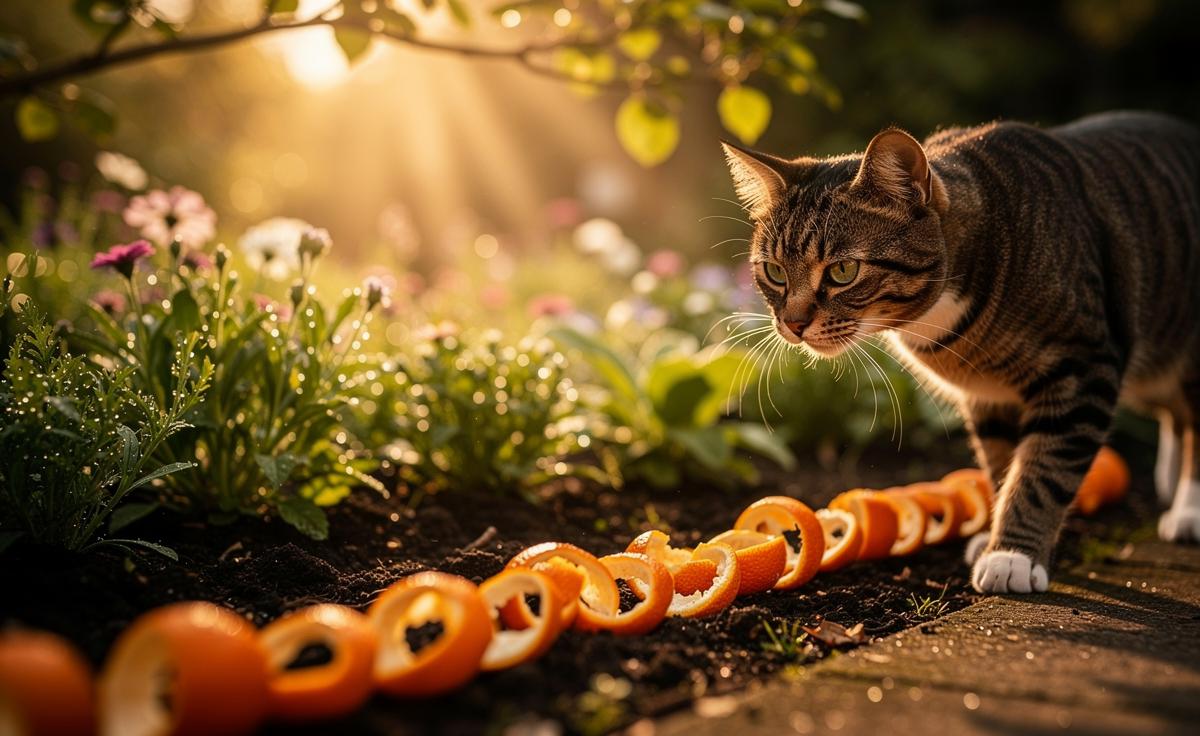
Start with fresh peels. Scatter small strips around the areas you want to protect—planter rims, seed beds, the base of bird feeders, the edge of a sandbox, or the corners of a sofa. For indoor use, tuck peels into breathable sachets to keep things tidy. Outdoors, partially bury thin curls in the topsoil to stop them blowing away. Replace every three to five days, or sooner after rain, because the aroma fades as the peel dries. A light rub of peel on a surface boosts the scent without leaving residue.
Safety matters. Whole fruit and natural rinds are generally safe as a passive deterrent, but do not use undiluted citrus essential oils around pets. Cats lack certain liver enzymes, so concentrated terpenes can be hazardous if inhaled or absorbed. Keep peels out of food prep zones and compost them before mould sets in. If aesthetics count, make a simple citrus sachet line: dried peel, rosemary, and cloves in muslin. It smells clean to humans yet still whispers “no entry” to whiskered visitors.
Science Behind the Scent: Compounds and Sensory Biology
Cats rely on a two-track smell system: the nose proper and the vomeronasal organ (Jacobson’s organ), which evaluates chemical signals with extraordinary precision. Citrus volatiles activate receptors that flag as aversive, encouraging withdrawal. This is not unique to cats, but felines seem particularly responsive to monoterpenes. The table below sketches the key players and what they do in practice. Understanding the chemistry helps you deploy orange peel effectively, with minimal fuss and maximum impact.
| Compound | Scent Character | Effect on Cats | Usage Note |
|---|---|---|---|
| Limonene | Bright, zesty, classic orange | Strong aversion; quick disengagement | Abundant in fresh peel; avoid concentrated oils |
| Linalool | Floral-citrus, soft lavender edge | Mild to moderate repellent effect | Present in peel; scent fades faster outdoors |
| Citral | Lemony, sharp, slightly bitter | Reinforces avoidance when combined with limonene | Best as part of whole-peel bouquet |
These compounds dissipate naturally, which is why results are strongest in the first 24–48 hours. To maintain the barrier, rotate peels from oranges, lemons, and grapefruits for a varied bouquet. Variation keeps the deterrent novel, preventing cats from simply habituating to a single note.
Alternatives and When Orange Peel Isn’t Enough
Some cats are stubborn. If orange peel reduces visits but doesn’t stop them, layer your strategy. Physical texture works wonders: coarse mulch, gravel bands, or chicken wire laid flat beneath soil makes scratching unrewarding. Motion-activated sprinklers or ultrasonic devices offer garden-wide coverage without confrontation. Indoors, use double-sided tape on target edges and provide an irresistible alternative—a sturdy scratching post scented with silver vine or catnip. Make the “yes” option easier and richer than the “no”.
For scent-based backups, try commercial pet-safe repellents or a mild citrus infusion: simmer discarded peels in water, cool, strain, and mist around entrances (test a hidden patch first). Avoid ammonia or mothballs—both unsafe. Be mindful of plants such as rue or pennyroyal; while reputed to deter cats, they carry toxicity risks. Finally, think like a journalist following a trail: why is the cat coming? Warm soil, bird activity, or a soft litter-like bed? Remove the reward and your deterrent becomes twice as effective. Consistency beats intensity in the long run.
Used smartly, orange peel is a nimble, low-cost way to reset boundaries without falling out with your feline neighbours. It smells pleasant to us, signals “keep out” to them, and slots neatly into a humane, layered plan. Refresh the peel, rotate scents, and shape the environment so the easy choice is to look elsewhere. If that fails, add texture, training, and gentle tech. You’ll spend less, waste less, and keep the peace. What spot will you try first, and how will you know when your citrus line has turned the tide?
Did you like it?4.5/5 (22)