In a nutshell
- 🐾 Learn to read canine communication—yawns, head turns, and tail carriage signal stress or calm; build a consent habit and use social referencing and sniff breaks to reduce arousal.
- 🧠 Ditch “alpha” myths: prioritise contingency over coercion and follow LIMA (Least Invasive, Minimally Aversive) methods; short-term suppression carries long-term costs, while humane reinforcement builds trust.
- 🎯 Use reward-based training: brief sessions, high early reinforcement, then variable schedules; leverage play and pattern games—as in the “Milo vs. buses” case—to rewire triggers without corrections.
- 📏 Commit to consistency and boundaries: agree a family plan for cues and rules, deploy management (gates, leads, covered windows), and prevent rehearsal to make the right choice the easy choice.
- 📒 Practise repair and reflection: after mistakes, lower criteria and reinforce correct choices; keep behaviour logs and add decompression routines (sniff walks, chews) to maintain progress.
Across Britain’s parks and pavements, dogs are quietly instructing us in empathy, clarity, and patience. Behaviour experts argue that a well-observed walk can rival a seminar in psychology: every glance, yawn, and tail flick carries meaning. The latest guidance from UK organisations such as the APBC and RSPCA converges on a simple premise: dogs do what works for them, and our job is to make the “right” choice the easy choice. This article gathers insights from trainers, veterinary behaviourists, and owners who have walked the long road from confusion to connection. Along the way, we discover how communication, reinforcement, and consistency shape not only canine behaviour but our own daily habits.
Reading Canine Communication: What We Miss and Why It Matters
Behaviour specialists stress that people often misread common canine signals. A “smile” may be a tight-lipped stress grimace; a wagging tail can herald uncertainty. When we mistake appeasement for joy, we unwittingly place dogs in situations they cannot handle. The fix begins with slow observation. Watch how your dog turns the head, blinks, or shakes off after a tense encounter—these are resets, not quirks. Experts recommend building a consent habit: pause before contact, let the dog approach, and watch whether they lean in or move away. In homes with children, this simple ritual reduces nips and elevates trust.
Another lesson is social referencing. Dogs read our posture and tone long before they parse words. If your shoulders soften at a passing bike, they mirror that calm; if you tense, they prepare for trouble. Clarity beats volume every time: short cues, neutral voice, consistent outcomes. Behaviourists also highlight environment—distance from triggers, exit routes, and sniffing time. Scent-work is not indulgence; it’s nervous-system medicine. Allowing structured sniff breaks can lower arousal and avert reactivity before it starts.
| Signal | Likely Meaning | Human Takeaway |
|---|---|---|
| Slow blink/averted gaze | Calming/avoiding conflict | Give space; reduce pressure |
| Yawning/lip licking | Mild stress or uncertainty | Lower intensity; add distance |
| Tail low and wagging | Ambivalence, not guaranteed joy | Approach softly or pause |
| Head turn/curve approach | Polite greeting signals | Don’t force face-to-face contact |
Why “Being the Alpha” Isn’t Always Better
Modern behaviour science challenges dominance myths. The “alpha” paradigm, borrowed from outdated wolf studies, often produces suppression, not learning. When dogs comply to avoid punishment, stress rises and problem behaviours may resurface elsewhere. Behaviourists advocate for contingency over coercion: teach the behaviour you want, reinforce it, and manage environments to prevent rehearsal of what you don’t want. This isn’t permissiveness. It’s precision. Boundaries still matter, but they are made visible through predictable routines and clear choices rather than force.
Pros vs. Cons of Dominance-Style Tactics:
- Pros (short term): Can interrupt behaviour abruptly; looks decisive to observers.
- Cons (long term): Risks fear, bites, and learned helplessness; erodes trust; masks root causes.
Experts prefer a Least Invasive, Minimally Aversive approach. Ask: what maintains the unwanted behaviour—access, attention, escape? Then adjust reinforcement. For jumping, reward four paws on the floor and remove attention for leaps (negative punishment: take away the thing the dog wants—your gaze—when the jump happens). Dogs repeat what earns them reinforcement, not what earns them a lecture. It’s humane, scalable, and backed by decades of data.
Patience and Play: The Science of Reward-Based Training
Reward-based training is not bribery; it’s behaviour economics. You’re paying in treats, toys, or life rewards for the behaviours you value. Behaviourists recommend short sessions (2–3 minutes), high rates of reinforcement at first, and a swift move to variable schedules to build resilience. Play is the classroom that never feels like school. Tug with rules (drop on cue), scatter-feed on grass for decompression, and use tug-release-tug cycles to teach self-control. The science says momentum matters: chain easy wins before asking for harder tasks, and your dog will meet you halfway.
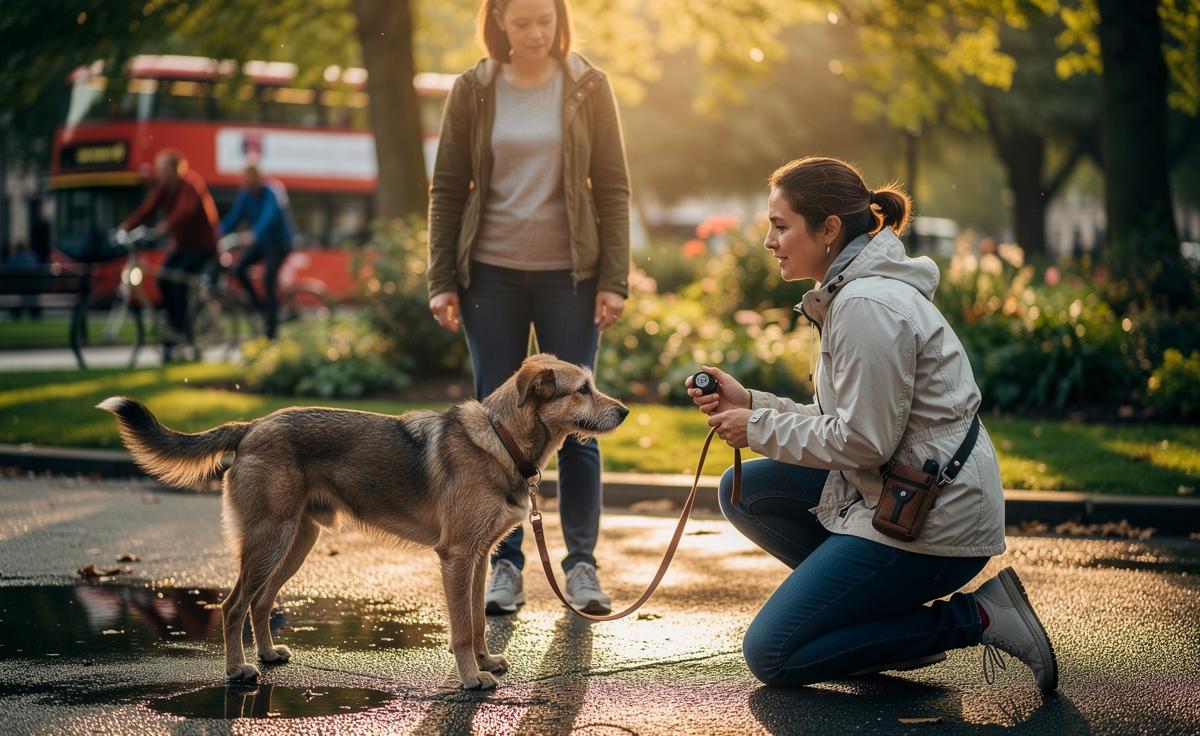
Case study—“Milo”, a two-year-old rescue, lunged at buses. A behaviour plan paired buses at sub-threshold distance with rapid-fire “yes + treat,” gradually closing the gap over six weeks. The twist was adding a pattern game—look at bus, look back to handler—so Milo could predict the next step. By week eight, the bus predicted a scatter of food behind him, prompting an automatic turn-away. The behaviour changed because the contingency changed. Notably, no corrections were needed, and Milo began offering check-ins even off duty.
Consistency, Boundaries, and the Art of Repair
The hardest lesson dogs teach us is the value of consistency. Inconsistent rules create inconsistent dogs. If the sofa is sometimes allowed and sometimes punished, the dog doesn’t become “stubborn”—the schedule becomes incoherent. Behaviourists advise a family contract: define cues, rewards, and rules in writing, and stick to them for 30 days. Use management—baby gates, leads indoors during training, covered windows—to stop rehersal of problem behaviours while new habits take root. Consistency is not severity; it’s repetition you can depend on.
Repair matters after we make mistakes. If you’ve snapped at your dog, reset the environment, halve the training criteria, and reinforce generously for the next correct choice. Build a decompression routine: sniff walks, chew sessions, and quiet time after stressful days. Behaviour experts also encourage tracking progress. A simple log—time, trigger, distance, response—transforms vague impressions into data. Over a fortnight, you’ll see patterns: mornings are easier than evenings; rain helps; crowds don’t. That evidence guides your next step more reliably than memory or mood.
In a country where roughly a third of households share life with dogs, our companions remain our best behavioural tutors. Watch their signals, invest in reinforcement, and set rules you can uphold on a rainy Tuesday as well as a sunny Saturday. The reward is a calmer home and a relationship built on mutual comprehension rather than compliance. From small triumphs—four paws on the floor—to major turnarounds with reactivity, the lessons are practical, humane, and portable to human relationships. What has your dog taught you this week, and how will you apply that wisdom beyond the end of the lead?
Did you like it?4.7/5 (20)