In a nutshell
- 🌤️ Understand your seasonal pattern: track mood, sleep, light, and movement to spot your onset window (often late Oct–mid Nov in the UK); daylight loss and a disrupted circadian rhythm are common triggers.
- 💡 Build a light-first routine: prioritise morning outdoor light or evidence-backed light therapy (e.g., 10,000‑lux box) and consider a dawn simulator; avoid bright light late evening to protect sleep timing.
- 🏃♀️ Move, fuel, and sleep: hit UK activity guidelines, choose protein-rich breakfasts with high‑fibre, low‑GI carbs and omega‑3s, consider vitamin D, set a caffeine curfew, and use CBT‑I tactics to stabilise sleep.
- 🧠 Use psychological tools and social design: schedule behavioural activation, apply quick CBT thought checks, pre-plan low-friction routines, and build a “social scaffold” to prevent isolation.
- 🤝 Seek timely support: contact your GP or NHS Talking Therapies early if symptoms escalate; remember that proactive help beats “toughing it out” when winter pressure mounts.
As Britain tilts into shorter days and slate-grey skies, many of us feel our mood ebb and our energy narrow. That’s more than inconvenience: for some, it’s seasonal affective disorder (SAD), and for many others, a persistent winter slump that blunts motivation and connection. The good news is that you can act before the clocks change. Early, evidence-based tweaks to light, routine, and social habits build resilience that lasts through February’s toughest weeks. Here’s a reporter’s account—blending expert guidance, lived experience, and fresh, UK-focused tactics—on how to get ahead of seasonal depression with smart, sustainable strategies rather than last-minute firefighting.
Understand the Seasonal Pattern and Your Triggers
SAD is more than “winter blues”: it’s a recurrent depression tied to reduced daylight, typically easing in spring. NHS sources estimate severe cases in a small but significant minority, with broader winter mood dips affecting far more people. Start with pattern-spotting. Review last year’s calendar: when did you cancel plans, hit snooze, or feel “flat”? Recognising your personal onset window—often late October to mid-November in the UK—lets you front-load protection. Keep a simple log tracking sleep, light exposure, movement, and mood for two weeks; you’ll see which levers matter most. Many readers tell me the first cold snap is less important than daylight loss and disrupted circadian rhythm.
One London commuter I interviewed felt awful every year after 16:00 dusk; the fix wasn’t heroic willpower, but shifting a 20-minute outdoor walk to late morning and adding a dawn simulator before the clocks changed. Watch for triggers such as heavy carb lunches, indoor-only days, and endless scrolling after dark. Think of triggers as dials, not switches—you don’t need perfection, just enough light, rhythm, and activity to keep mood buoyant. If you’ve had severe winter depression or bipolar disorder, speak to your GP early to plan support.
Build a Light-First Routine Before the Clocks Change
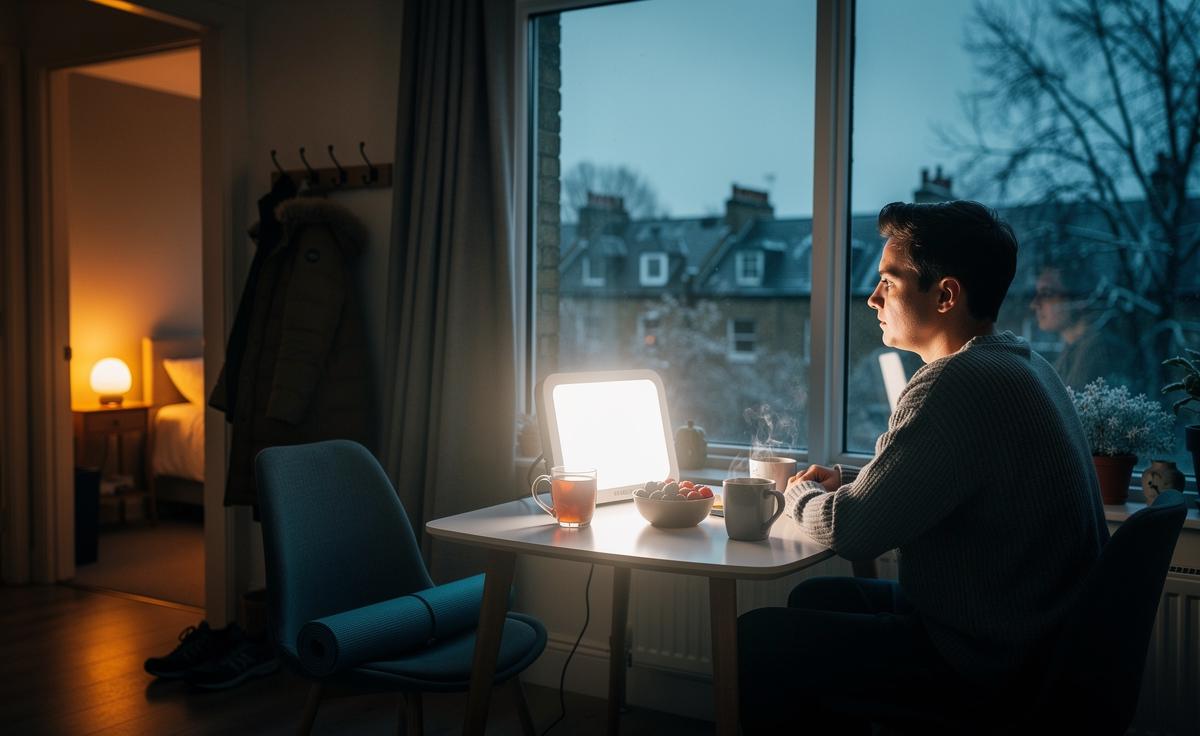
Light is the most powerful daytime signal to stabilise your body clock. Aim for outdoor morning light—ideally within an hour of waking—for 20–30 minutes. If that’s impossible, consider light therapy. Evidence supports 10,000-lux boxes used in the first part of the day; start with 20–30 minutes while reading or emailing. Begin two weeks before the time change to “bank” circadian stability. A dawn simulator that gradually brightens your bedroom can ease wake-ups without the shock of an alarm, which many readers find crucial in late autumn. Safety note: if you have eye conditions, migraines, or a history of mania, consult a clinician before using bright-light devices.
Below is a simple comparison to guide choices:
| Tool | Typical Use | Pros | Cons |
|---|---|---|---|
| 10,000-lux light box | 20–30 min after waking | Strong evidence; quick effect | Not for evening; may cause jitteriness |
| Dawn simulator | 30–45 min pre-alarm | Smoother wake; bedroom-friendly | Less potent than light boxes |
| Outdoor daylight | 20–40 min morning | Free; mood and vitamin D benefits | Weather and daylight constraints |
Pros vs. Cons snapshot: morning exposure improves alertness and sleep timing; evening bright light can worsen insomnia. Why evening “brightening up” isn’t always better: it tricks your clock, pushing sleep later and mood lower. Set a nightly “dim” time—warm lamps, screens on night mode—to protect the gains you’ve built.
Move, Fuel, and Sleep: The Biological Trio That Shifts Mood
You won’t out-think a winter slump if your physiology is under-fuelled, under-moved, and under-slept. Exercise works like an antidepressant for many: follow UK guidance of 150 minutes of moderate activity weekly, or 75 minutes vigorous, plus two strength sessions. For dark days, micro-doses help—3×10-minute brisk walks or a Tabata set at lunch. A Manchester reader shared that swapping a late-night gym blast for a 12:30 walk plus a 17:30 light dinner stopped her 02:00 insomnia and lifted afternoon mood. The mechanism is simple: movement boosts dopamine and serotonin, while regular timing anchors your circadian rhythm.
Nutrition-wise, prioritise protein at breakfast, high-fibre, low-GI carbs, and omega‑3 sources (oily fish, flax). Consider discussing vitamin D supplementation with a clinician during darker months. Caffeine is best front-loaded; set a hard stop six to eight hours before bed. Protect sleep with a consistent schedule and a 30–60 minute wind-down (dim light, warm shower, print book). If insomnia creeps in, CBT‑I techniques—stimulus control, sleep restriction—are effective and available via NHS Talking Therapies in many areas. Small, consistent routines beat heroic weekend resets.
Psychological Tools and Social Design That Prevent Isolation
Winter narrows horizons; design your weeks so connection is the default. Start with behavioural activation: schedule low-effort, high-meaning actions—coffee with a friend, a choir rehearsal, ten minutes of mindful breathing. When mood dips, action should lead feelings, not await them. Cognitive tools matter too. A quick CBT loop: catch a thought (“I’m failing at work”), challenge it (evidence for/against), and change it (balanced alternative). Keep frictions low: warm kit by the door, auto-booked swims, pre-paid classes. Build a “social scaffold” before December—monthly potluck, Wednesday coworking, Sunday walk group.
Public services can help. If you’ve had winter depressions before, contact your GP early; ask about CBT, medication, or combined care. NHS Talking Therapies often accept self-referrals; waiting lists vary, so start now. A volunteer role—library helper, food bank, park run marshal—creates purpose and daylight exposure. If your mood plummets or you have thoughts of self-harm, seek urgent help via NHS 111, your GP, or emergency services. You are not expected to “tough out” winter alone; proactive support is a strength, not a failing. Design your environment so the easiest choice is the healthiest one.
Getting ahead of seasonal depression isn’t a single grand gesture; it’s a series of modest, strategic changes layered before the dark truly bites. Anchor light in the morning, protect sleep at night, move daily, and build a social scaffold that makes isolation unlikely. Track what works for you, and adapt weekly—winter is a moving target. If symptoms are severe or persistent, loop in professional support early. Which small, specific step—light, movement, sleep, or social—will you lock in this week to make January feel markedly different?
Did you like it?4.5/5 (20)