In a nutshell
- 🧱 Everyday micro-moments model integrity, accountability, and executive function; narrating calm problem-solving turns slip-ups into feedback that compounds into grit.
- 🗣️ Rich “serve-and-return” talk and dialogic reading grow critical thinking; evidence from the EEF shows parental engagement can add ~4 months of progress, with autonomy (child-led book choices) boosting motivation.
- ⏰ Predictable routines and adequate sleep reduce stress and improve focus; simple rituals (e.g., “10-10-10” wind-down) and daily activity (per UK CMOs) build emotional regulation and smoother mornings.
- 📱 Screens work best with content, context, and control; co-view, create (not just consume), and use device zoning to protect sleep and attention while keeping learning social and purposeful.
- 💷 Home is a “hidden curriculum”: budgeting and manners teach opportunity cost, delayed gratification, and empathy; try a 50/40/10 spend-save-give allowance with monthly reflection to link capability to community.
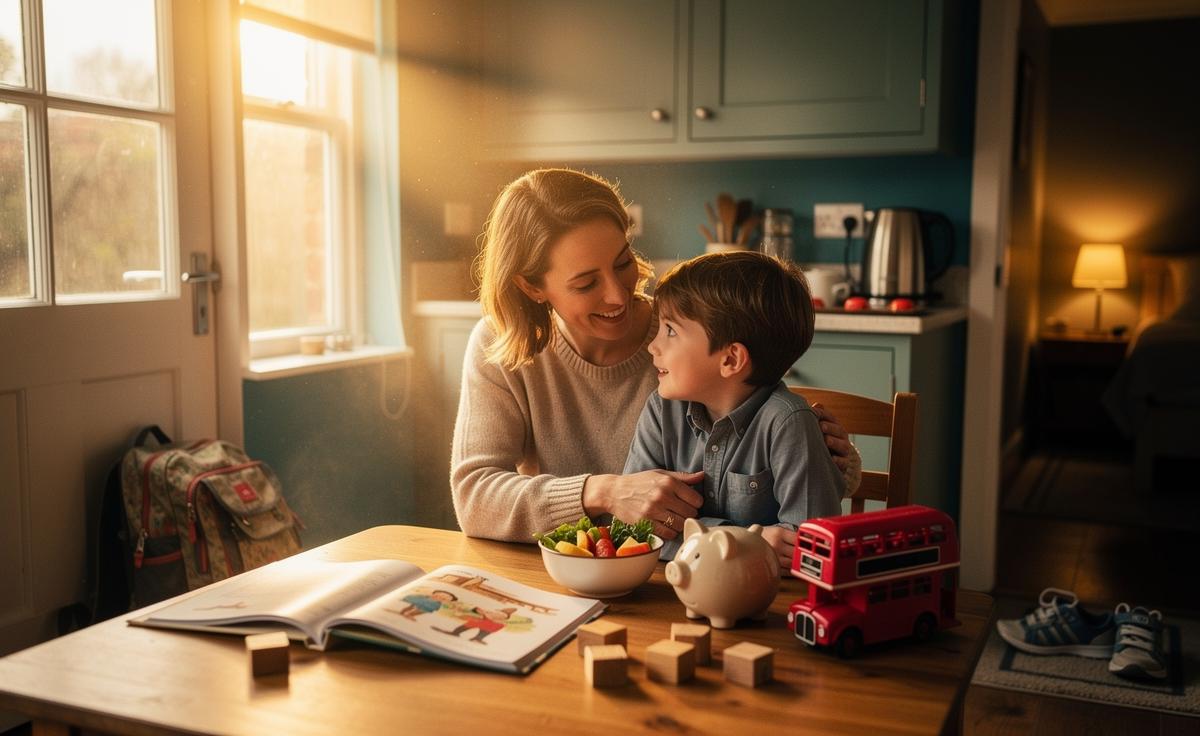
We like to think the milestones mark a child’s path: the first step, the first day at school, the first exam result. Yet it’s the quiet rituals — the school run chat, the shared washing-up, the bedtime book — that lay the deepest foundations. Everyday actions are not trivial; they are the curriculum of character, cognition, and wellbeing. In kitchens from Kent to Kirkcaldy, parents and carers unconsciously teach priorities, resilience, and attention through tiny choices repeated thousands of times. A child’s future is less a single leap and more a staircase built one small habit at a time. Here’s how those micro-moments work, and how to make them work for you.
The Micro-Moments That Build Character
Character isn’t lectured; it’s modelled. Each time you return late library books and explain why, you’re teaching integrity. When you admit a mistake, you model accountability. Psychologists call this “social learning”: children copy the behaviours that are rewarded and repeated at home. In practice, that means your tone during stress — not your sermon about it — becomes their script. Consistency beats intensity: small, predictable actions compound faster than grand gestures.
Consider a simple anecdote. On the 8:12 bus to school in Salford, a dad narrates his problem-solving: “We missed the earlier bus; here’s Plan B.” His son hears calm planning, not panic. Over years, such “Plan B” talk fosters executive function — the mental skill set behind planning, focus, and impulse control. It’s the difference between abandoning a tough maths problem and breaking it into steps. For parents, the practical takeaway is simple: narrate your thinking, praise effort, and turn slip-ups into feedback. Those tiny nudges add up to grit.
Language, Reading, and the Science of Talk
Brain architecture is built through conversation. The back-and-forth “serve-and-return” of talk strengthens neural pathways for language and reasoning. Reading for just ten minutes after tea — asking, “Why do you think the fox lied?” — is less about plot and more about critical thinking. In the UK, evidence matters: the Education Endowment Foundation reports that parental engagement approaches add, on average, around four months of progress over a year, especially for disadvantaged pupils. Talk is not a luxury; it is cognitive nourishment.
| Everyday Action | Near-Term Effect | Long-Term Payoff | Evidence Pointer |
|---|---|---|---|
| Dialogic reading (ask “why/how” questions) | Richer vocabulary | Better comprehension and reasoning | EEF: Parental engagement +4 months |
| Story retelling at breakfast | Sequencing skills | Improved writing structure | Language development research |
| Family news roundup | Active listening | Communication confidence | Social learning theory |
Try a “three questions” routine after reading: What surprised you? What changed? What would you do differently? Add a weekly library trip and let your child pick at least one book; autonomy boosts motivation. If English isn’t your first language, keep reading and talking in your strongest tongue — fluency transfers. The goal is regular, rich, two-way talk, not perfection.
Routines, Sleep, and the Architecture of Safety
Routines reduce decision fatigue for adults and anxiety for children. A reliable morning rhythm — clothes laid out, bag packed, breakfast together — becomes a scaffold for independence. Predictability is not dull; it’s the backdrop that lets curiosity shine. The NHS emphasises consistent bedtimes; many primary-age children thrive on roughly 9–12 hours of sleep. The principle is less about the exact minute and more about a calm, repeatable wind-down that tells the brain, “It’s safe to switch off.”
Consider a Leeds family who replaced screen wind-down with a “10-10-10”: ten minutes to set tomorrow’s clothes, ten minutes tidying a shared space, ten minutes of quiet reading. Within weeks, mornings ran smoother and sibling spats dropped. Why? Because transition rituals help kids manage emotions at the pinch points of the day. To embed routine without rigidity, use:
- Visual schedules for younger children — pictures, not paragraphs.
- Two-choice autonomy: “Shower first or pack bag first?”
- Weekly “retro”: What worked? What will we tweak?
The UK Chief Medical Officers recommend at least 60 minutes of moderate-to-vigorous activity daily for school-age children. Fold it into your routine — a brisk school run counts — and you’ll see benefits in sleep, mood, and attention.
Screens, Play, and Why More Isn’t Always Better
Technology is woven into modern childhood, but volume isn’t the only metric. What matters most is content, context, and control. Co-viewing a nature documentary and discussing it (“How does erosion work?”) yields more learning than passive scrolling. Similarly, unstructured play — Lego on the carpet, den-building in the park — develops spatial reasoning and cooperation in ways no app can fully replicate.
Pros vs. Cons of Everyday Screen Choices:
- Pros: Educational apps can scaffold phonics, co-gaming can teach teamwork, video calls sustain family bonds.
- Cons: Late-night use disrupts sleep; notifications fragment attention; solo scrolling can crowd out reading and outdoor play.
A practical UK-tested approach is “device zoning”: keep bedrooms and dinner tables screen-free, set app timers, and agree a family media plan reviewed each term. When screens do appear, switch from consumer to creator: make a stop-motion film, code a simple game, record a family podcast. The message your child absorbs is powerful: technology is a tool we direct, not a tide we obey.
Money, Manners, and the Hidden Curriculum of Home
Children learn about money long before they open a bank account. Let them help plan a Sunday roast on a budget, compare unit prices, and decide what’s worth a treat. You’re teaching opportunity cost and delayed gratification — predictors of later financial health. Manners, too, are not merely niceties; they are social algorithms for future workplaces. A sincere “thank you,” eye contact, and taking turns in conversation are daily drills in empathy. Homes teach the unwritten rules that unlock written exams.
Consider a simple allowance system in Birmingham: 50% spend, 40% save, 10% give. The child logs decisions in a small notebook and reviews monthly: What did I enjoy? What would I change? That reflection loop mirrors professional budgeting later on. Pair this with “service moments” — writing a note to a neighbour, helping clear a shared stairwell — and you connect capability to community. The implicit lesson: success expands when it includes others.
Your influence is strongest in small doses repeated daily. From the words you choose over cornflakes to the way you solve a snag on the school run, you’re drafting your child’s future habits, hopes, and heuristics. Start tiny: one more open question, one steadier bedtime, one extra lap of the park, one co-created budget. The compounding effect of ordinary care is extraordinary. Which micro-action will you elevate this week — and how will you know it worked?
Did you like it?4.4/5 (22)