In a nutshell
- 🗓️ Stop over-scheduling: protect unstructured play, sleep, and two free afternoons to cut stress and boost creativity.
- 🏅 Avoid the praise trap: replace person praise with process praise to reduce perfectionism and build a growth mindset.
- 🧭 Set calm, predictable limits: use natural consequences, family scripts, and connection-first discipline—consistency over intensity.
- 📱 Create firm digital boundaries: dock devices overnight, keep meals screen-free, and co-write a simple media plan focused on sleep and safety.
- 🧡 Model wellbeing and repair: share the mental load, design micro self-care, and use repair rituals after slip-ups to rebuild trust.
Parenting rarely fails for lack of love; it falters on habit. In interviews across UK homes, I’ve watched well-meaning mums and dads juggle clubs, praise charts, and bedtime stand-offs—only to see stress snowball. This expert alert isn’t a scolding; it’s a reset. Below are the common mistakes you must stop and the practical swaps that protect your child’s wellbeing and your sanity. You’ll find evidence-backed tips, lived examples, and quick checks you can action by tonight. Small, steady course corrections beat grand gestures every time. Think of this as a field guide: humane, realistic, and designed for modern family life where time is tight and attention is tugged from every direction.
Over-Scheduling Childhood: Why Busy Isn’t Always Better
From piano to parkour, it’s tempting to treat childhood like a calendar puzzle. The problem is not enrichment—it’s overload. Research on sleep, stress hormones, and executive function consistently shows that downtime is not dead time. Unstructured play is a developmental accelerator, helping children rehearse social rules, tolerate uncertainty, and build creativity. When every afternoon is booked, you blunt those gains and inflate the family’s cortisol. A Year 6 parent in Manchester told me her daughter could nail scales but not self-soothe; the fix wasn’t another club, it was a cushion of white space.
Ask three questions before saying “yes” to the next activity: Does it replace sleep? Does it crowd out free play? Does it create logistical panic for the household? If the answer to any is “yes,” the cost is too high. A useful ratio is two structured commitments per term, max, with at least two free afternoons each week. Quality trumps quantity: one beloved club beats four tolerated ones. Children who learn to be “bored” learn to begin—to start games, ideas, and conversations without adult choreography.
Practical swap: ring‑fence a weekly “nothing hour” after school. Keep snacks simple, screens off, and let boredom bloom. You’ll see fewer meltdowns at bedtime and more self-directed play by the weekend. For older kids, guard Sunday mornings for sleep and low-stakes pottering. The paradox holds: the less you rush them, the more they get done.
The Praise Trap: When Encouragement Backfires
“You’re so clever!” feels kind, but person praise (clever, gifted, talented) can paint children into a perfectionist corner. They begin to avoid hard tasks that might expose them as “not clever after all.” Praise the process, not the person: effort, strategy, patience, and help‑seeking. A Bristol dad I shadowed shifted from “You’re brilliant at maths” to “You stuck with the hard bit and tried two methods.” Within a term, his son attempted extension questions instead of dodging them. The goal is a growth mindset without the buzzwords: specific feedback that celebrates what the child controlled.
Watch for the flip side—over‑praising the trivial. Children are exquisite lie detectors; if we spray “Amazing!” at every scribble, our currency devalues. Reserve big words for big effort. Use descriptive feedback: “You layered three colours and kept inside the border—that took patience.” For mistakes, normalise them: “Errors are data.” If they win, spotlight sportsmanship; if they lose, spotlight resilience. Avoid comparative praise (“You’re better than…”) that seeds rivalry at home or in class.
Fast reframes to bank tonight: swap “You’re a natural” for “You practiced consistently.” Replace “So tidy!” with “You created a clear plan and followed it.” And turn “Don’t worry” into “Worry makes sense; let’s break this into steps.” These tiny edits teach children that effort is influence, and that’s rocket fuel for motivation.
| Habit | Short‑Term Benefit | Long‑Term Cost | Quick Fix |
|---|---|---|---|
| Person praise (“You’re brilliant”) | Immediate smile | Perfectionism, risk‑avoidance | Process praise (“You tried three ways”) |
| Over-scheduling | Skill exposure | Fatigue, less creativity | Keep two free afternoons |
| Inconsistent rules | Short reprieve | More pushback later | Agree a family script |
Discipline Dilemmas: Boundaries Without Bruises
Shouting often “works” in the moment—because children fear, freeze, or fawn. But it burns trust and teaches that big people win by going bigger. Calm consistency beats loud intensity. Decide the rule when you’re calm, state it briefly, and follow through once. The wobbly middle—three warnings, a lecture, a bargain—creates the very negotiations you dread. A London primary teacher told me the best-behaved class wasn’t the strictest; it was the most predictable. Children relaxed because the adults were boringly reliable.
Use natural consequences where possible. If toys aren’t put away, they take a brief holiday on the top shelf. If a teen misses curfew, tomorrow’s curfew comes forward—no drama, no debates. Keep empathy in the room: “I get that you’re frustrated. The rule still stands.” When emotions spike, try a short “reset”: both of you breathe, sip water, then revisit the limit. Connection is not the opposite of correction; it’s the precondition. A child who feels seen can hear you.
Retire punishments that humiliate. Public call‑outs, sarcasm, and forced apologies teach hiding, not honesty. Swap “time‑out” for a brief “time‑in” when a child is flooded: sit nearby, model regulation, and re‑enter the day together. For recurring flashpoints—homework, screens, sibling fights—write a family script: two lines you will always use, and the consequence that always follows. Scripts reduce ad‑libbing and power struggles, and they travel well between co‑parents and carers.
Digital Boundaries: Screens, Sleep, and Sanity
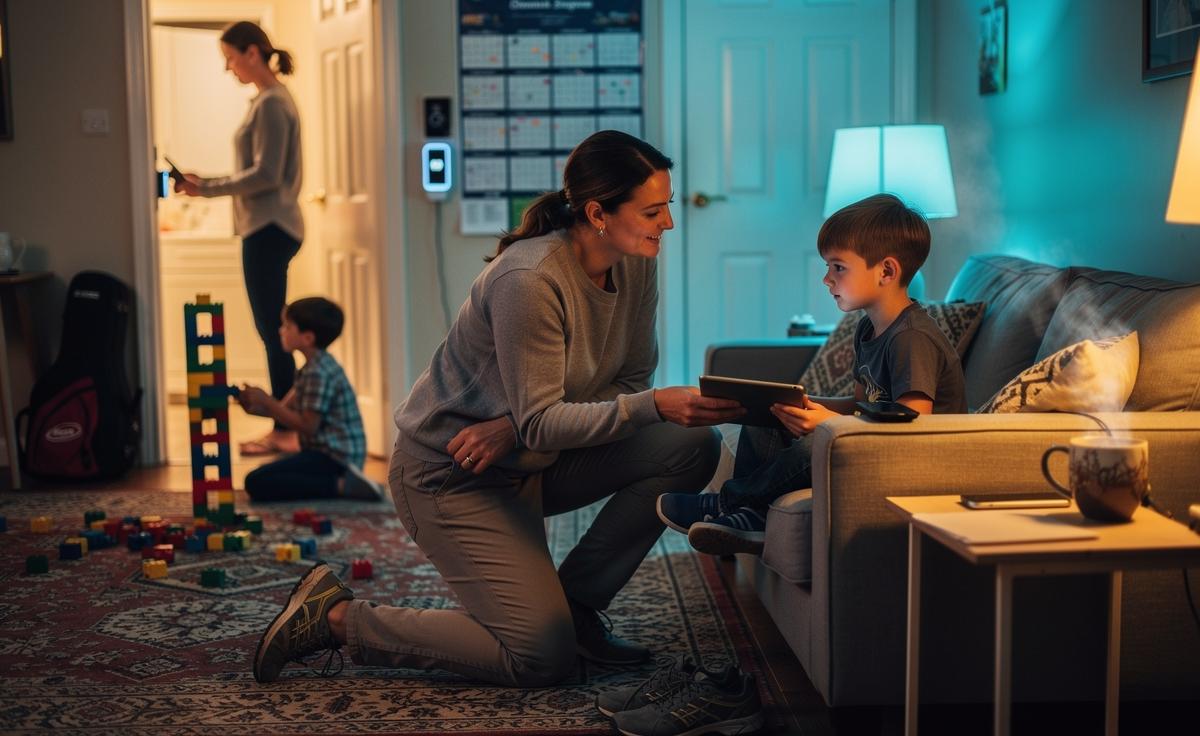
UK families tell me the toughest arguments now come with a charger. The target isn’t zero screen time; it’s intentional screen time. The highest‑risk trade is sleep for scroll. Blue light delays melatonin, but so does drama—streaks, chats, and cliffhangers. Make two non‑negotiables: devices docked outside bedrooms overnight and no personal screens at mealtimes. These two rules alone improve sleep, posture better conversation, and reduce “just one more” spirals.
Co‑create a simple media plan: list the apps allowed, the times they’re allowed, and the red lines (anonymous chats, location sharing). Invite your child’s input and write it down; contracts beat nagging. For younger children, bundle screen time with routines: “After homework and snack, you’ve 30 minutes.” For teens, negotiate windows, not minutes: two windows per day, devices visible in shared spaces. Boundaries work best when they’re boring, brief, and consistent.
Don’t forget content literacy. Teach the “three checks”: who made it, what they want, and what’s missing. Share your own slip-ups—clickbait, doomscrolling—to model recovery, not perfection. And keep one family hobby offline: chess, baking, cycling on the Greenway. Screens are tools; the point of childhood is still real life.
Parental Burnout: Modelling Wellbeing Matters
Children copy what we do, not what we say. If they see you gulp coffee, skip meals, and doomscroll to midnight, they learn that adulthood equals depletion. Self‑care is not a spa day; it is system design. Protect the basics: sleep, sunlight, movement, and one daily thing that restores you for 10 quiet minutes. Tell your child what you’re doing and why: “I’m taking a walk to settle my brain; I’ll be back in 15.” That narration is a masterclass in regulation.
Co‑parents: compare calendars weekly and remove one commitment each. A family can’t run on fumes. Agree recovery rules after conflict: a hug, a glass of water, and five minutes apart before problem‑solving. Build a tiny repair ritual for when you shout or slip—own it, name the feeling, restate the limit. Children don’t need a perfect parent; they need a repairing one. The result is trust that survives inevitable human moments.
Finally, check for invisible load. Are you carrying all the emails, forms, and birthday cards? Share “mental admin” aloud and hand over tasks by default, not request. Keep a whiteboard of recurring jobs and rotate. When the house runs on shared responsibility, you free bandwidth for warmth, play, and being silly—the glue that keeps families resilient when life gets lumpy.
Parenting improves not by adding hacks, but by stopping the habits that quietly drain your home: relentless schedules, hollow praise, chaotic rules, unbounded screens, and self‑sacrifice as a badge. Start with one change and hold it for two weeks; watch how the atmosphere shifts. Consistency is kinder than intensity. Your child doesn’t need a new you—just a steadier one. Which single habit will you stop first this week, and what tiny swap will you make to prove to yourself that your family can change course?
Did you like it?4.5/5 (22)