In a nutshell
- 🔥 2025 confirmed as the UK’s warmest year on record with a mean temperature of 10.09C; the top three hottest years are 2025, 2022, 2023, and all top 10 warmest have occurred in the past two decades.
- ☀️ Sunniest year since records began: 1,648.5 sunshine hours, +61.4 vs 2003; the hottest single day remains 19 July 2022 (> 40C), but 2025 was marked by persistent warmth.
- 🌡️ Driven by persistent high-pressure and warm seas: every month except January and September was warmer than average; March–August were at least 1C above the 1991–2020 norm, delivering the warmest spring and warmest summer.
- ⚡ Energy upside: solar supplied more than 6% of Britain’s annual electricity—over a 50% increase on recent years—thanks to record sunshine.
- 💧 Hidden strain: below-average rainfall with record lows in some areas increased pressure on reservoirs, rivers, and farms; the Met Office highlights a clear signal of human-induced climate change.
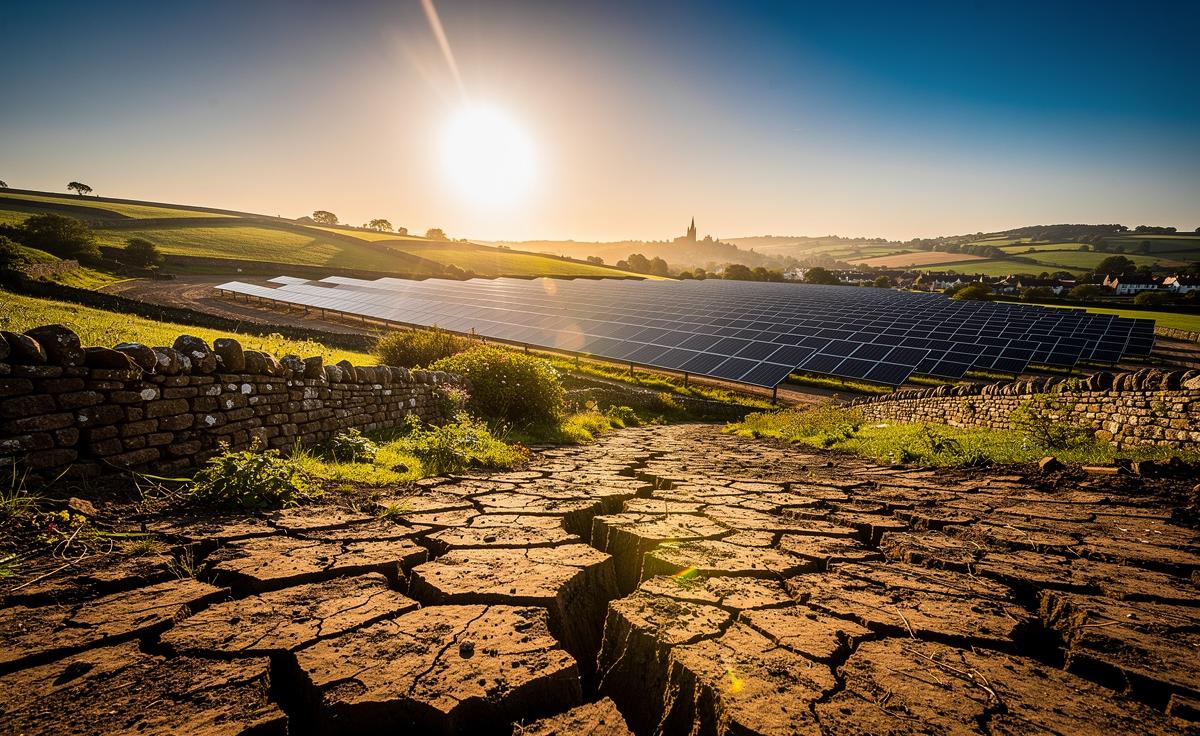
2025 was the UK’s warmest and sunniest year on record, confirmed by the Met Office, and the headlines barely capture the scale of the shift. A new mean temperature high of 10.09C tops all years since 1884, and sunshine totals have never been higher. This decade alone now contains the three hottest UK years on record, a stark signal that the climate baseline is moving. Heat did not arrive only in sharp spikes; it lingered. It shaped spring, supercharged summer, and stretched into autumn. Solar farms thrived. Rivers struggled. The data is unambiguous, but the lived experience—long, bright days and parched ground—tells the story in full color.
Records Shattered Across Temperature and Sunshine
The standout figure is simple and startling: a UK mean of 10.09C in 2025. That makes it the warmest year in a series running back to 1884, and only the second time since the 19th century that the national mean exceeded 10C. The podium now reads 2025, 2022, and 2023. All of the top 10 warmest years have occurred in the past two decades, compressing centuries of climate variability into a single generation’s timeline. The pattern is unmistakable: the UK’s climate bell curve is sliding, and what once counted as rare warmth is rapidly becoming routine.
Sunshine joined temperature in the record books. With 1,648.5 hours recorded since 1910’s benchmark, 2025 beat the previous high—set in 2003—by 61.4 hours. That’s not a rounding error; it’s the difference between a good summer and an exceptional one stretched across a calendar year. While the single hottest day remains 19 July 2022, when temperatures exceeded 40C, the hallmark of 2025 was persistence rather than peaks. Consistent warmth and bright skies defined the national experience, from coastal towns to upland farms.
| Metric | 2025 Value | Previous Record | Note |
|---|---|---|---|
| Mean temperature | 10.09C | 2022 (second), 2023 (third) | Only second year since 19th century > 10C |
| Sunshine hours | 1,648.5 | 2003 | +61.4 hours vs 2003 |
| Hottest single day | — | 19 July 2022 | Exceeded 40C (record stands) |
What Drove the Heat: High Pressure and Warm Seas
“2025 was the warmest year on record for the UK, surpassing the previous record set in 2022,” said Dr Mark McCarthy, the Met Office’s head of climate attribution. He added: “This very warm year is in line with expected consequences of human-induced climate change.” The phrasing matters. Not every year will top the chart, but the direction of travel is clear. Climate models and real-world observations now rhyme, and the rhyme scheme points to a warmer, brighter UK—punctuated by extremes.
The weather engine behind the warmth was well understood. The Met Office’s Dr Emily Carlisle noted that “every month except January and September [was] warmer than average”, producing both the warmest spring and the warmest summer in the national series. Between March and August, each month ran at least 1C above the 1991–2020 average. The culprits: persistent high-pressure systems that brought prolonged dry, sunny conditions, and above-average sea temperatures around the UK that helped lock in the warmth. Heatwaves punctuated spring and summer, yet the singular hottest day remains 19 July 2022, when temperatures exceeded 40C. The story of 2025 is different: durable, day-after-day heat that remapped the seasonal norm.
Energy And Water: Bright Skies, Hidden Strains
There was an upside in the ledger. With record sunshine, the UK’s solar farms surged. In 2025, solar met more than 6% of Britain’s annual energy requirements, a figure representing a more than 50% increase on recent years. That is a material leap, not a marginal gain. It softened gas demand, trimmed emissions, and buoyed the economics of rooftop and utility-scale solar alike. Sunshine translated directly into cleaner power, making the grid a quiet beneficiary of a brighter year. The irony is striking: the same conditions that signal a changing climate powered the very technologies built to confront it.
Yet brightness brought scarcity. Overall rainfall totals were below average, and some areas experienced record low rain. Reservoir managers watched levels closely. Rivers ran low, ecosystems felt the squeeze, and farmers scanned the skies in vain. While 2025’s headline was warmth, the subhead was dryness, the kind that accumulates slowly and then becomes obvious all at once. Prolonged high pressure delivers blue skies—and hydrological stress. The year’s weather became a case study in trade-offs: cleaner power from the sun alongside mounting pressure on soils, streams, and storage.
Climate Signals From A Decade Redefining “Normal”
The broader context is stark. The UK’s three hottest years on record have now all been in this decade, and all of the top 10 warmest years have occurred within the past two decades. That clustering is the signal, not the noise. As McCarthy put it, “We’re increasingly seeing UK temperatures break new ground in our changing climate.” The UK temperature series from 1884 to 2025 reads like a slow incline that has recently steepened. The old baselines—what we learned to call a typical spring, a standard summer—no longer serve as reliable guides.
For 2025, the character of the warmth mattered almost as much as its magnitude. Carlisle pointed to the “consistent heat throughout the year,” which is precisely what drives sector-wide knock-on effects, from energy planning to land management. Not every year will set a new record, but the map of probabilities has shifted towards more heat, longer bright spells, and recurring anomalies. Human-induced global warming is impacting the UK’s climate—and the latest records merely made that visible in daily life, from sunlit commutes to parched allotments and low-flow streams.
In a single year, Britain experienced a climate postcard from the future: hotter, brighter, and drier. Solar thrived, reservoirs worried, and the thermometer told a consistent story. The numbers—10.09C mean, 1,648.5 sunshine hours, months stacked at least 1C above average between March and August—anchor the narrative in hard evidence. The question is no longer whether the baseline is shifting, but how fast. As 2026 begins, what investments, policies, or habits will we change to live well—and safely—under a sunnier, warmer UK sky?
Did you like it?4.5/5 (28)