In a nutshell
- ☀️ Safety snapshot: Passengers are generally safe during solar flares; risks are mostly operational, with higher caution on polar routes and occupational dose management for crew under IRR17.
- 📡 What flares do: Daytime HF radio blackouts, occasional GNSS errors, and temporary increases in microsievert-level exposure—most noticeable at high latitudes due to solar energetic particles.
- 🛰️ New findings & forecasts: With Solar Cycle 25 peaking, improved nowcasting of R/S/G events from the Met Office SWOC, NOAA SWPC, and ICAO advisories enables targeted, fuel‑savvy reroutes.
- 🧭 Airline playbook: Avoid poles, step down altitude, switch to SATCOM, rely on inertial backups, and track crew dose via tools like CARI to keep exposure ALARP.
- 🧳 Passenger takeaways: Expect occasional rerouting, modest delays, or patchy connectivity; single-flight radiation remains low, while pregnancy/frequent flyers should seek personalised medical advice.
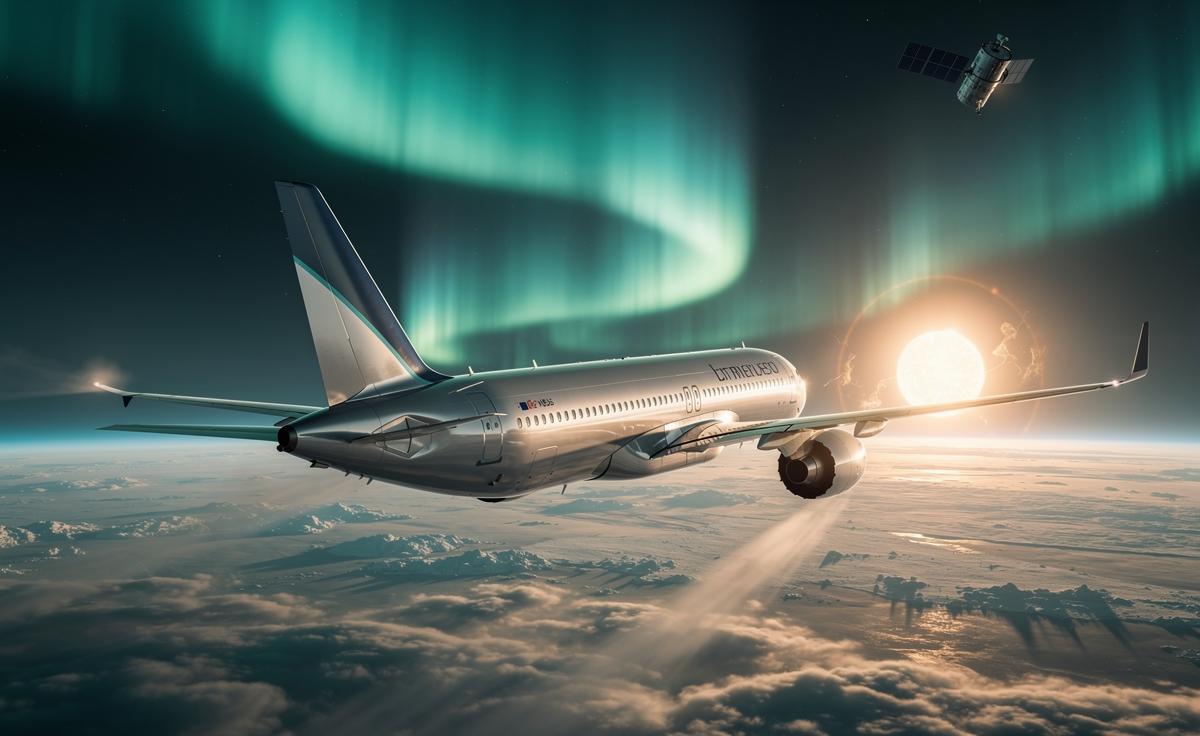
Solar activity is surging again, and with it comes a familiar anxiety: what happens to aviation when the Sun misbehaves? Airlines, regulators, and scientists watch solar flares and their fallout because they can disturb navigation, radio links, and even the low-level radiation we all absorb at cruising altitude. New research and better forecasts are sharpening the picture. The central question remains deceptively simple: is it safe to fly during solar flares? The answer, experts say, depends on route, timing, and the type of space-weather event at play. Here’s what the latest findings mean for pilots, crew, and passengers departing from a grey UK morning or a sparkling Arctic night.
What Solar Flares Do to Aircraft and Crew
Solar flares unleash bursts of X-rays and extreme ultraviolet light at the speed of light, sometimes followed by slower coronal mass ejections that rattle Earth’s magnetic field. The immediate effect can be HF radio blackouts on the daytime side of the planet, a nuisance for transoceanic flights that still rely on HF beyond VHF coverage. A different hazard arises when solar energetic particles stream into the atmosphere near the poles, nudging dose rates higher. At typical cruising altitudes, background exposure sits in the low single-digit microsieverts per hour. During strong particle events, high-latitude flights can see temporary increases, occasionally doubling baseline values.
Does that make flying dangerous? For the public, no. For most passengers, the risk remains low and well below thresholds associated with measurable health effects on a single trip. The context matters: a London–New York crossing typically delivers on the order of tens of microsieverts, far less than a medical imaging dose. Pilots and cabin crew, who accumulate exposure over thousands of hours, are managed under occupational limits. Airlines in the UK monitor doses and plan duties to keep exposures as low as reasonably practicable. Where the Sun’s tantrums bite hardest is operational: crackling HF, jittery GNSS positioning at high latitudes, and dispatchers weighing fuel against reroutes.
New Findings From Space-Weather Scientists
Researchers tracking Solar Cycle 25 report more frequent large flares and complex sunspot groups, aligning with the cycle’s peak. The clearest advances aren’t sensational; they’re practical. Better nowcasting of R-scale radio blackouts from X-ray flux, improved prediction of S-scale radiation storms using upstream solar wind, and regional models that flag GNSS scintillation over the Arctic. The upshot is a tighter warning window that lets airlines adjust routes or altitudes before the worst of the disruption arrives. The UK’s Met Office Space Weather Operations Centre feeds this into ICAO’s global advisory network alongside the US NOAA SWPC and other designated centres, giving dispatchers a common, aviation-ready language.
Here’s a quick guide to the event types that matter in the cockpit and operations room:
| Event | Primary Aviation Risk | Typical Mitigation |
|---|---|---|
| R (Radio Blackout) from flares | HF comms loss on sunlit paths; degraded ADS-C/CPDLC via HF | Shift to SATCOM where available; adjust frequencies and routes |
| S (Radiation Storm) from solar particles | Elevated dose at high latitudes/altitudes; potential avionics upsets rare | Lower latitude tracks; step down altitude; limit polar exposure time |
| G (Geomagnetic Storm) from CMEs | GNSS errors, compass deviations, HF variability | Use inertial backups; widen separation; revise approach minima if needed |
New peer-reviewed analyses highlight that risk is uneven: polar routes carry the largest operational burden, mid-latitude corridors far less. Crucially, models now blend satellite data, ground magnetometers, and aircraft reports to refine forecasts as events unfold. That means fewer shotgun reroutes and more targeted, fuel-savvy decisions when the Sun acts up.
How Airlines Manage the Risk in Practice
On an active solar day, decision-making starts hours before pushback. Dispatch teams scan Space Weather Advisories and NOTAM-like bulletins, overlay them with winds, ETOPS alternates, and fuel policy. If a significant S-class storm is likely, the first lever is trajectory: avoid polar caps, bias tracks south, or plan a lower cruise. Altitude matters because dose rate increases with thinner air; stepping down can help, though it costs fuel. Safety trumps schedule, but the industry has become nimbler at threading the needle between caution and efficiency.
Communications redundancy is the next layer. Crews brief HF procedures, frequency changes, and SELCAL, while ensuring SATCOM and datalink options are primed. Navigation resilience is checked: inertial reference systems provide continuity if GNSS goes shaky. In the UK, operators manage cumulative exposure for crew under IRR17 (Ionising Radiations Regulations 2017), logging flight profiles and using approved dose models such as CARI to keep totals within company limits. Regulators, including the CAA and partners through ICAO, share event summaries post-flight to capture lessons swiftly. The result is a system designed not just to survive a storm, but to learn from it—turning rare disruptions into better playbooks for the next solar season.
What Passengers Should Know Right Now
First, perspective. A typical transatlantic flight adds tens of microsieverts to your annual background dose—tiny compared with a medical X-ray. Even when the Sun flares, the additional exposure for passengers on non-polar routes is usually modest. If your flight goes ahead, it’s because the airline and regulators judge the risk to be acceptably low. You might notice knock-on effects that feel very earthly: a delayed departure to catch a different route, a longer flight time, or a temporary loss of inflight connectivity if satellite links get patchy. None of these means danger; they’re guardrails working as intended.
Pregnant travellers may wish to discuss frequent long-haul trips with their clinician, not because a single flight is hazardous, but to tailor overall exposure across a journey-packed year. Seat choice doesn’t change radiation dose meaningfully; altitude and latitude do, and those are the captain’s call. If you’re booked on a polar route during a major storm, expect the airline either to reroute or, on rare occasions, to postpone. Travel insurance and fare rules apply as usual unless an airline cancels. Practical tip: keep essentials in your cabin bag and a power bank handy—space weather can ripple into schedules and onboard Wi‑Fi more than into your personal health.
So, is it safe to fly during solar flares? The consensus is steady: yes for passengers, with smart caveats for polar operations and crew management. Stronger forecasting and coordinated space-weather advisories mean airlines can sidestep the worst, often with nothing more dramatic than a different track and a few extra minutes of flight time. The Sun can disrupt, but commercial aviation is built to adapt. As Solar Cycle 25 peaks, would you trade a slightly longer route for the reassurance of flying below the storm—or do you prefer to stick to the shortest path and trust the forecasts guiding your crew?
Did you like it?4.6/5 (25)