In a nutshell
- 🌌 The Universe’s New Year “message” is evidence over omens: cycles like the Quadrantids and signals from JWST and gravitational waves show that wonder disciplined by data yields clarity.
- 🔭 From stars to statistics: observations sharpen models, urging us to measure more, claim less and prioritise verifiable signals over speculation at the start of 2026.
- 🗺️ Practical takeaways: tackle light pollution, back open data collaborations, use longitudinal metrics for policy, and design routines that cultivate awe—because consistency beats intensity.
- ⏳ Why waiting isn’t better: acknowledge pros of listening but avoid inertia; adopt observe–hypothesise–test–adjust, add “regardless clauses,” and remember extraordinary claims require extraordinary evidence.
- 🇬🇧 UK case study: Dark-sky policy in Northumberland and beyond treats starlight as a public good, delivering energy savings, healthier wildlife, stronger tourism, and richer education.
As 2026 dawns, many will glance upward and hope for a sign. In truth, the sky is speaking plainly if we choose to listen. The Universe’s “message” on New Year’s Day is not a cryptic omen but a composite of repeatable cycles, measured signals, and practical lessons gathered over decades of observation. Early January’s quiet skies, the coming Quadrantid meteors, and the steady pulse of gravitational waves tell a single story: reality rewards attention. Clarity is not rare; it’s earned by looking closely. In that spirit, here is what the cosmos is saying at the turn of the year—and how to translate it into choices that matter on Earth.
From Stars to Statistics: Reading the Year’s First Night
We love the symbology of a clean calendar, yet the Universe keeps its own time: planetary conjunctions that mean little to our diaries, star births that span eons, and meteor showers that arrive by orbital appointment. The early-January Quadrantid shower—brief but intense in good years—reminds us that patterns exist whether or not we plan our resolutions around them. Meanwhile, telescopes on mountaintops and in space continue to return data that shrinks uncertainty. The message is simple and stern: This is the year to trade vague omens for verifiable signals.
At the frontier, JWST has been resolving infant galaxies, pressuring theories about the pace of early structure formation. On Earth, time-domain surveys map supernovae like a nightly heartbeat, while gravitational-wave observatories turn cataclysm into measurement. None of this is mystical. It is a ledger of cause and effect at cosmic scale. Evidence accumulates; models improve; predictions sharpen. If the sky says anything today, it’s that humility plus method beats certainty without proof.
There is solace in that stance. It makes the vastness usable. It also sets a tone for 2026: measure more, claim less, and reserve awe not as an escape but as fuel for careful action. Wonder, disciplined by data, is a working philosophy.
Signals, Evidence, and Practical Takeaways
To turn starlight into guidance, we should separate domains, weigh evidence, and extract what helps daily life. Consider these signals and their grounded implications. Clarity emerges when we move from “meaning” to “use”.
| Domain | Signal | Evidence | Practical Takeaway |
|---|---|---|---|
| Astronomy | Skyglow rising | Over 80% of people live under polluted night skies | Adopt shielded, warmer street lighting to restore stars and cut costs |
| Cosmology | Routine gravitational-wave events | Multiple detections show compact object mergers | Invest in open data; collaboration accelerates discovery |
| Earth Observation | Satellite-based trend lines | Consistent multi-sensor datasets across years | Prioritise longitudinal metrics over headlines for policy |
| Human Health | Benefits of awe | Studies link awe to reduced stress and prosocial behaviour | Design public spaces and routines that invite skyward moments |
The Universe is not whispering destiny; it is publishing datasets. For communities, that translates into concrete steps: dim glare, protect nocturnal habitats, and keep observatories accessible to schools. For individuals, the advice is surprisingly actionable: schedule time outside at twilight, learn a half-dozen constellations, and track one celestial cycle across the year. Consistency beats intensity. The first morning of 2026 asks for habits that are small, measurable, and sustained.
Why Waiting for a Sign Isn’t Always Better
We are tempted to pause for a perfect omen. But postponement dressed as spirituality is still postponement. The Universe’s clarity is in how it behaves, not in what we project onto it. Here’s the trade-off.
- Pros of Listening: Encourages reflection; cultivates patience; can reduce reactivity; promotes systems thinking.
- Cons of Waiting: Risks inertia; invites confirmation bias; cedes agency to coincidence; delays feedback you actually need.
Consider a simple rule for 2026: observe, hypothesise, test, adjust. Treat career moves, community projects, even family routines like modest experiments. When the sky is overcast and the Quadrantids don’t oblige, your plan should not evaporate. Build “regardless clauses” into resolutions: “Run twice weekly regardless of weather; review metrics monthly regardless of mood.” Signals should inform agency, not replace it. The Universe’s message is not “wait”—it is “iterate.”
In media, we also have duties: cite sources, distinguish uncertainty, and resist the gravitational pull of thrilling but thin claims. That editorial ethic mirrors astrophysics: extraordinary claims demand extraordinary evidence.
A UK Case Study: Turning Starlight Into Policy
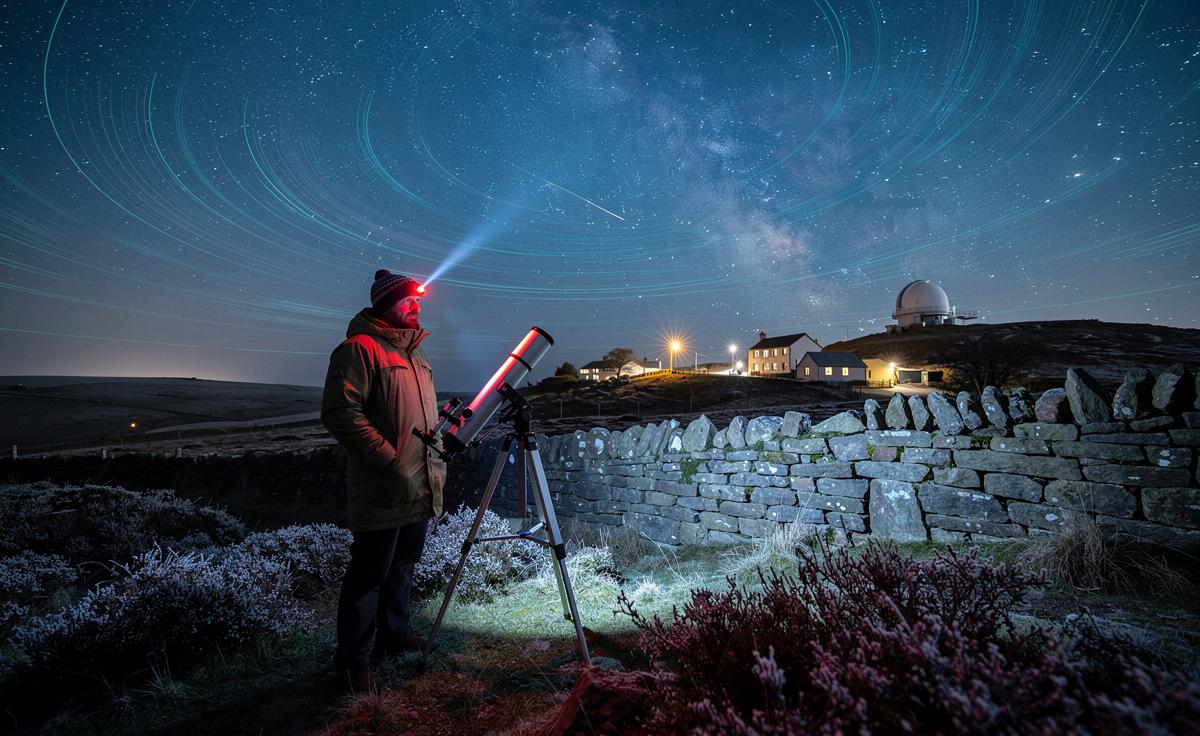
Across Britain, dark-sky work offers a template for acting on cosmic clarity. In Northumberland’s International Dark Sky Park and in reserves from Exmoor to Galloway, councils, astronomers, and residents have coordinated on lighting audits, shielded fixtures, and community stargazing. The results are practical, not poetic: energy bills fall, wildlife corridors recover, and children see the Milky Way without leaving home. Starlight became a public good because people treated it like one. That is the Universe’s message translated into procurement, bylaws, and weekend plans.
Speak to local photographers and you hear the same refrain: once glare drops, the night becomes legible. Tourism follows, with winter “astro” weekends filling rooms that sat empty a decade ago. Schools fold the sky into curricula, and residents learn to navigate by Orion, Ursa Major, and the Pleiades. None of this required prophecy. It required measurement, patience, and neighbours talking to neighbours. 2026 invites more towns to make darkness visible again—a quiet civic revolution powered by physics and care.
On 1 January 2026, the Universe’s message is not encoded in fate but etched in patterns you can verify: cycles, signals, and consequences. If you want meaning, build it from evidence and share the method. Start with the sky above your street; fix what dims it; protect what thrives under it; and let that discipline spill into how you vote, spend, and teach. Wonder is the spark; follow-through is the flame. As this year opens, what experiment—personal or public—will you run to turn cosmic clarity into everyday change?
Did you like it?4.5/5 (24)