In a nutshell
- 🌦️ Unusual UK winter marked by jet stream whiplash, with rapid flips between mild, stormy spells and brief freezing snaps driving floods and black ice.
- 🌍 Global context: 2023 was the warmest year on record, warm oceans and El Niño amplify moisture and storm intensity, boosting atmospheric rivers.
- 🚆 Daily life impacts: mixed pros and cons for energy, transport, and health—lower heating demand at times but higher risks from freeze–thaw, mould, and travel disruption.
- 🧠 Forecasting shift: improved ensemble modelling, high-resolution guidance, and impact-based warnings offer clearer risk bands than deterministic forecasts.
- 🧰 Preparedness: adopt dual-mode resilience—drainage and flood readiness plus ice kits, travel buffers, and health ventilation—to handle fast-changing conditions.
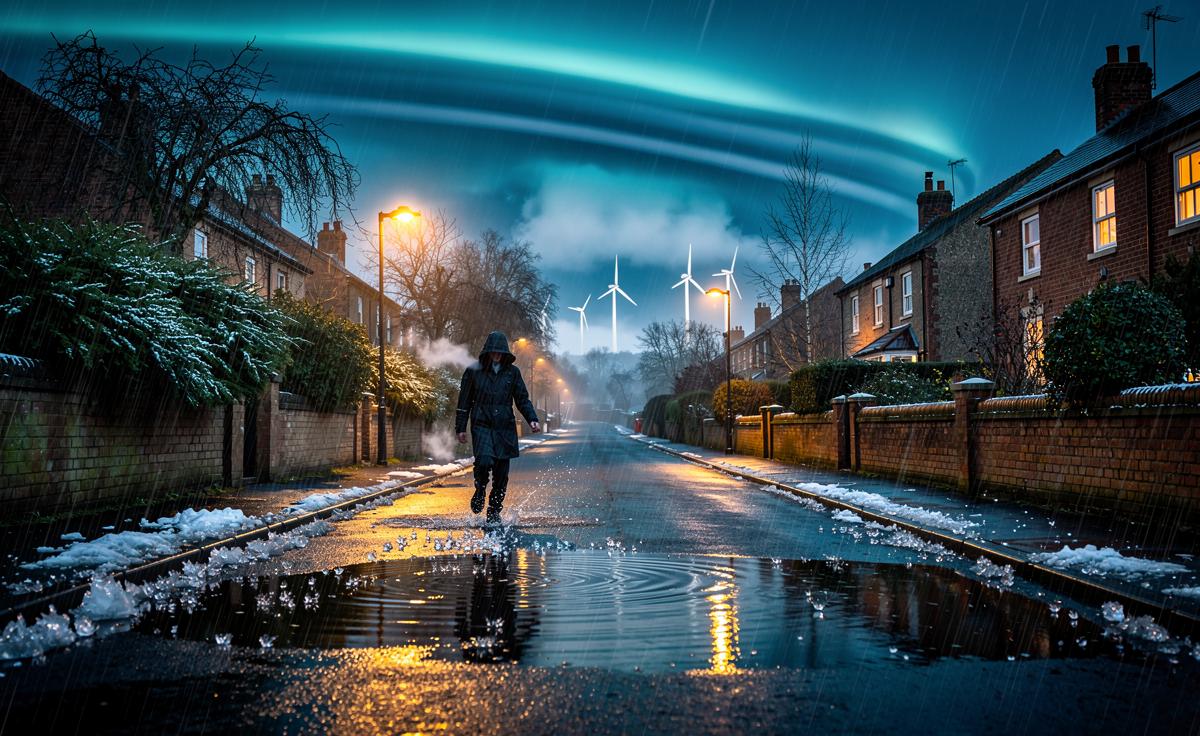
This week’s weather alert lands with a twist: the British winter is behaving oddly, blending bursts of spring-like mildness with sharp, short-lived frosts and relentless rain bands. From the Highlands to the South Coast, forecasters report a dance of contrasts that is both familiar and new. The backdrop is global—record-breaking warmth in 2023 and lingering ocean heat—yet the consequences are intensely local: saturated soils, swollen rivers, and roads slick with black ice after midnight chills. The headline is clear: unusual winter patterns are no longer outliers; they are edging towards the new normal. What follows is a close, practical read on what is driving this winter’s oddities and how to respond.
What the Data Say: Signals Behind the Odd Winter
Several overlapping drivers are shaping this season. The first is the North Atlantic jet stream, which has wobbled between unusually fast, moisture-laden flows and sudden bends that stall weather systems over the UK. Add to that the periodic push from El Niño in the Pacific, which can tilt the odds toward milder, wetter European winters, and the intermittent jolts of sudden stratospheric warming (SSW) events that sometimes dislodge cold air southward. Overarching these is Arctic amplification—the fast-warming Arctic that can alter temperature gradients and, by extension, storm tracks. When these signals align, the result is volatility: rapid swings in temperature, rain-to-snow flip-flops, and floods following on the heels of dry spells.
As a data point, multiple international agencies confirmed 2023 as the warmest year on record globally. That warmth has left oceans storing exceptional heat, “priming” the atmosphere with moisture. The UK feels that as repeated frontal systems and occasional atmospheric rivers, dumping heavy rain over already-sodden catchments. One Lincolnshire grower described a “two-season week”: hard frost Monday, T-shirt weather by Thursday, then ankle-deep mud by Saturday. That elasticity is tough on agriculture, health services, and transport alike, and it complicates both short- and seasonal forecasting.
| Pattern | Primary Driver | Likely UK Impact | Signal Strength |
|---|---|---|---|
| Stormy, mild spells | Strong jet, warm seas | Heavy rain, wind damage | Frequent this winter |
| Short cold snaps | SSW, blocking highs | Ice risk, brief snow | Intermittent |
| Stalled systems | Jet meanders | Localised flooding | Elevated |
Jet Stream Whiplash: From Atmospheric Rivers to Blocking Highs
The jet stream’s position and speed are the steering wheel of our winter. Lately, it has favoured two modes: a rapid, zonal firehose driving successive rain bands, and a meandering, blocked pattern that parks weather over the same area for days. In the first mode, mild Atlantic air surges in, sometimes with atmospheric rivers funneling moisture that can turn a routine rainy day into a flood watch. In the second, a high-pressure block over Scandinavia or Greenland can reroute colder air toward Britain and throttle the storm conveyor, bringing clearer skies but sharper frosts. Neither mode is inherently “worse,” yet the quick flips between them increase disruption.
Travel tells the story. A Manchester commuter recalls a morning of drizzle and 8°C followed by a flash freeze and glazed pavements by nightfall as winds veered northerly. Aviation, too, sees costs mount: headwinds slow westbound flights under a hyperactive jet, while crosswinds challenge regional airports. Energy demand oscillates, complicating grid management—warm, windy days flood the system with renewables; cold, still nights force backup generation. For emergency planners, the sharp transitions matter as much as the extremes: crews pivot from pumping out basements to gritting roads within 24 hours. It’s the whiplash, more than any single event, that strains resilience.
Pros vs. Cons for Daily Life: Energy, Transport, and Health
Not every facet of this strange winter is negative. On the plus side, milder interludes trim heating bills, while frequent windy spells boost wind power generation. Cloudier nights can reduce severe radiative frost, sparing some crops. Yet the ledger tips when volatility is factored in. Rapid temperature swings magnify risks: ice after rain, snow on saturated ground, and potholes born from freeze–thaw cycles. For commuters, that means variable braking distances and more debris on roads; for rail, expanded maintenance windows to manage waterlogged earthworks; and for coastal towns, repeated bouts of high surf eroding defences after spring tides.
Public health faces its own pros and cons. Fewer prolonged cold spells can lower excess winter mortality, yet damp, windy periods correlate with respiratory illnesses and mould in substandard housing. Healthcare trusts report uneven surges—fewer hypothermia cases, more slips and asthma flare-ups. Households confront a juggling act: clearing gutters for rain one week, preparing for black ice the next. In agriculture, mildness encourages winter growth in pasture but invites pests and waterlogging. A Cambridgeshire arable team noted that early-sown cereals “looked April-healthy in January,” only to suffer root stress after repeated inundations. Weather that is less cold isn’t automatically easier; resilience depends on predictability, drainage, and timing.
Why Traditional Forecasts Struggle—and What’s Improving
Classic winter lore—onset dates, “snow signals,” and long-range rules of thumb—falters when the atmosphere is supercharged with heat and moisture. Seasonal models juggle El Niño–Southern Oscillation, Arctic sea-ice anomalies, and stratospheric dynamics, but small errors in the jet’s latitude can yield large UK impacts. Moreover, today’s storm systems can draw energy from exceptional ocean warmth, altering intensity and rainfall distribution late in the forecast cycle. In short, the physics haven’t changed, but the boundary conditions have.
There is progress. Forecasters increasingly use ensemble modelling to quantify risk bands rather than single outcomes, and high-resolution convection-permitting models better capture narrow rain bands and snow pivot zones. Machine-learning post-processing now helps correct systematic biases, sharpening rainfall intensity forecasts and improving river flood guidance. For the public, the shift is toward impact-based warnings: not “it will snow,” but “expect hazardous travel on untreated routes.” This matters in volatile winters, where decision quality beats deterministic precision. The forecast is becoming a risk toolkit, and that makes the information more actionable.
How to Prepare: Practical Steps for Households and Councils
Preparation now means planning for oscillation, not a single scenario. Households can lean on “dual-mode” readiness: gear for wet and mild, plus kit for short sharp freezes. Councils, meanwhile, must flex operations across drainage, debris clearance, and winter service. Think of resilience as modular—quick to reconfigure as the pattern flips. A few targeted actions offer outsized returns when conditions whiplash.
- Drainage first: clear gutters, check street gully grates, and use sandbags where runoff concentrates.
- Ice readiness: stock grit, keep boot spikes in cars, and pre-identify shaded paths that refreeze.
- Power resilience: charge backups, maintain torches, and register for priority services if vulnerable.
- Travel buffers: add time, watch for fallen branches after windy spells, and avoid flood-prone shortcuts.
- Health checks: ventilate to reduce damp, service boilers, and keep inhalers accessible during mould season.
| Action | Benefit in Mild/Wet | Benefit in Short Freeze |
|---|---|---|
| Gutter and gully clearing | Prevents local flooding | Reduces black-ice puddles |
| Car winter kit (grit, torch, blanket) | Useful in breakdowns during storms | Critical for icy delays |
| Weather alert apps and river gauges | Early flood awareness | Timely ice/grit updates |
For Britain, the winter headline is paradoxical: fewer prolonged freezes, more high-impact swings. The science points to a warmer world shaping a moodier North Atlantic, and the lived experience confirms the strain on homes, farms, and transport. Resilience improves when we plan for whiplash, not just extremes. As forecasting shifts toward probabilities and impacts, decisions can be better timed—from when to grit to when to postpone a journey. With unusual patterns now revealed and likely to recur, how will you adapt your household routines, community planning, or business operations to stay one step ahead of the next sharp turn in the season?
Did you like it?4.8/5 (20)