In a nutshell
- 🔆 Falling prices, faster payback: Panel and battery costs are down, inverters are smarter, and 0% VAT plus the Smart Export Guarantee push typical payback into the 6–9 year range.
- 💷 Energy independence and bill stability: Higher self-consumption and battery storage reduce exposure to price spikes, while time-of-use tariffs help shift demand away from peak rates.
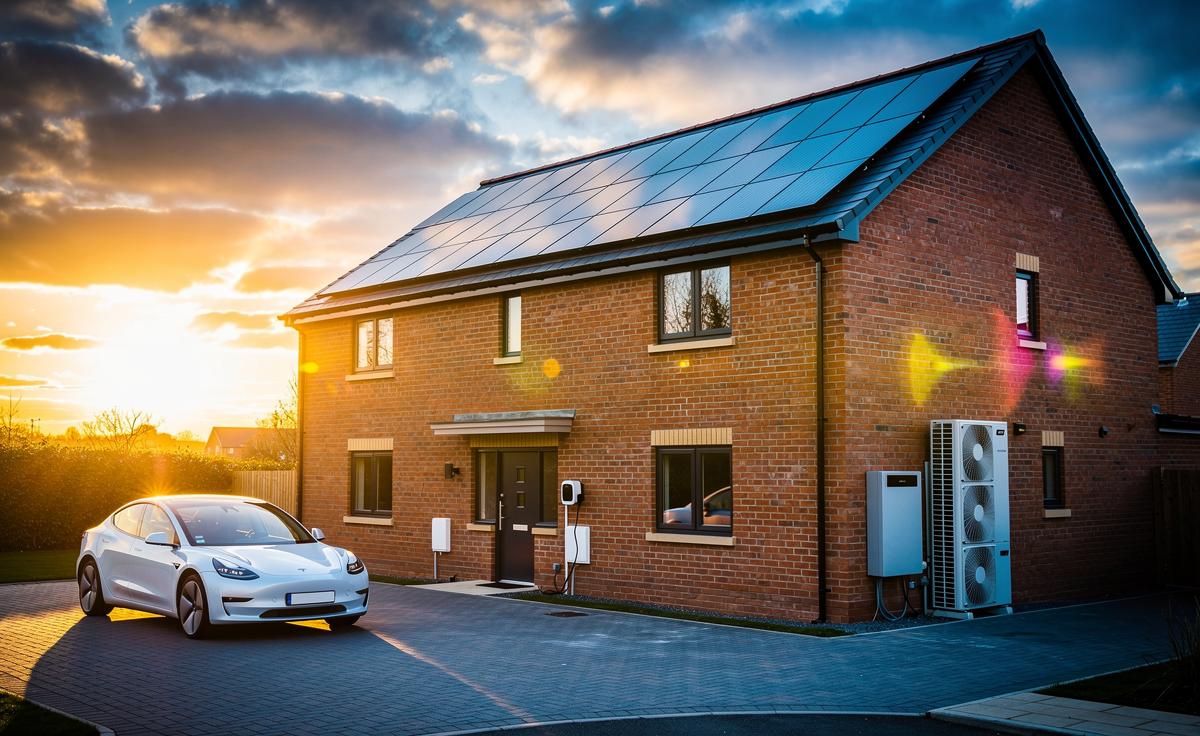
- 🔋 Smarter tech integration: Batteries, EVs, heat pumps, and home energy management systems coordinate to store, shift, and sell power; V2H and V2G pilots signal the next wave of value.
- 🌍 Climate and clean air gains: Rooftop solar cuts operational emissions, supports EV charging and heat pumps, and contributes visibly to the UK’s Net Zero trajectory.
- 🛒 Easier buying and better finance: MCS-certified installers, RECC/HIES protections, clearer quotes, green loans, and group-buy schemes build trust and lower barriers.
In 2026, solar power stops feeling like a niche upgrade and starts looking like an everyday utility. Costs have eased, tech has matured, finance is simpler, and Britain’s appetite for energy independence is unmistakable. Households want control. Businesses want certainty. The grid wants flexibility. Solar offers all three. The most compelling shift is psychological: people no longer ask whether solar works in the UK; they ask how quickly it can pay for itself and how to add a battery. From suburban semis to light-industrial roofs, panels are appearing with a purpose: slash bills, cut carbon, and stabilise the future.
Falling Prices and Faster Payback in 2026
Panel prices have tumbled over the past few years, while installers have streamlined surveys, scaffolding, and commissioning. Inverters are smarter. Batteries last longer. The result is a cleaner quote, with fewer add‑ons, and a shorter path to break-even. For UK homes using a typical amount of electricity, a well-specified 4–6 kW system paired with a modest battery can now produce a simple payback many households once thought impossible. Zero-rated VAT on domestic solar and batteries, currently set to run through 2026, magnifies the saving right at purchase, and the Smart Export Guarantee pays you for exporting surplus.
| Home type | System size | Indicative cost | Annual bill saving | Export tariff range | Simple payback |
|---|---|---|---|---|---|
| Flat/Small terrace | 3–4 kW | £4,500–£6,000 | £400–£650 | 2–15 p/kWh | 7–10 years |
| Suburban semi | 5–6 kW | £6,000–£8,500 | £600–£1,000 | 2–15 p/kWh | 6–9 years |
| Detached with battery | 6–8 kW + 5–10 kWh | £9,000–£13,500 | £900–£1,400 | 2–15 p/kWh | 6–8 years |
Figures vary by roof, shading, region, and tariff, but the direction is clear. Prices are down. Returns are up. Financing options expand the audience even further. Spread the cost, keep the saving. CAPEX becomes predictable; your home or premises generates for 20+ years. In 2026, the payback conversation finally sounds less like wishful thinking and more like standard household budgeting.
Energy Independence and Bill Stability
Electricity prices remain volatile. Caps move. Wholesale markets bite. Solar smooths the spikes. Generating your own power covers daytime loads, from fridges to laptops to heat-pump compressors in shoulder seasons. Add a battery and you bank the afternoon sun for the evening peak. Simple. Powerful. Every kilowatt-hour you self-consume is one you don’t buy at peak prices, and in 2026 that peace of mind matters as much as the pounds saved.
It’s not just independence; it’s strategy. Many suppliers now offer time-of-use rates that reward off-peak charging. Pair solar with a battery and you can top up cheaply on windy nights and ride through peak tariffs. If you drive electric, daytime panels feed the car; at weekends, surplus tops up the battery. The effect is cumulative. Self-consumption rises, bills fall, and the home becomes a miniature power station. Importantly, this stability is weather-resilient in the UK context: spring and summer deliver the bulk, but shoulder months still chip away at costs, and winter exports during bright spells still count. The outcome is less exposure to price shocks and more control at the socket.
Climate Responsibility and Local Air Quality
Solar is the decarbonisation workhorse that fits roofs and business parks without fanfare. It tackles emissions where we live and work, cutting demand for gas-fired generation and reducing losses across the network. In 2026, climate action has shifted from slogans to specifics: households switching to rooftop solar are reducing operational emissions for decades, and small firms are doing the same across warehouses and retail units. Real panels on real roofs, making measurable dents in real-world carbon.
There’s a local dividend too. Panels are silent. No tailpipe. No urban fumes. When solar charges an EV or supports a heat pump, you clean the air on your own street. The cumulative effect across a neighbourhood can be striking. Schools and community buildings with daytime loads see immediate reductions, and councils increasingly recognise solar as a planning-friendly upgrade. For businesses, ESG reporting gains teeth: on-site generation is tangible, auditable, and attractive to customers. The story is not just greener power; it’s cleaner air and visible leadership. Net Zero is a national target, but its progress is counted roof by roof.
Smarter Tech: Batteries, EVs, and Heat Pumps
Energy tech has clicked into place. Today’s batteries offer stronger warranties and smarter control. Inverters manage export limits and frequency response. Home energy management systems automate charge and discharge around weather data, tariffs, and household routines. The grid is turning dynamic, and your rooftop can now play along. That’s a leap from the fit-and-forget era to genuine optimisation.
For EV drivers, this is where it gets interesting. Daytime solar flows to the car for pennies. At night, a battery can soak up cheap off-peak energy for the morning commute. V2H and V2G pilots show where things are heading: cars as mobile storage, homes as schedulable demand, suppliers paying for flexibility. Heat pumps join the party, shifting hot water production to sunshine hours. The household becomes a coordinated system, not a collection of appliances. This synthesis translates into value: higher self-consumption, smarter exports, and potential participation in flexibility services offered by some suppliers. In 2026, the smartest kilowatt is the one you store, shift, or sell at the right moment.
Easier Buying, Better Finance, and Stronger Consumer Protection
Buying solar used to feel daunting. Now, quotes are clearer, supply chains steadier, and accreditation more visible. Look for MCS-certified installers and consumer protection schemes such as RECC or HIES. Planning is typically straightforward under permitted development for most homes, and flat-roof mounting options are cleaner than ever. That administrative friction that once stalled projects has been sanded down.
Finance has caught up too. Green loans and mortgage-linked products spread upfront cost across useful lifespans, and some suppliers wrap solar, battery, and tariff into a single packaged deal. Group-buy schemes coordinated by local authorities can aggregate demand for sharper pricing, while businesses can expense on-site generation against operational savings with confidence. The 0% VAT incentive on eligible domestic systems sweetens the numbers, and export tariffs remain a simple path to monetise surplus. Clarity matters: transparent performance estimates, tidy warranties, and responsive aftercare now form the baseline. Trust has become a product feature, and in 2026 the sector knows it.
From price drops to smart storage, from cleaner air to calmer bills, solar in 2026 is less a gamble and more a grounded decision. The UK has the rooftops, the tech, and the market signals to make it stick. Households and businesses alike are seizing that agency, turning sunlight into certainty and spreadsheets into savings. If you could lock in lower bills, cut carbon on your street, and future‑proof your energy with gear that works quietly for decades, what would stop you—and what would you build into your system first?
Did you like it?4.7/5 (20)